
Words Fail (1999)
Peggy’s approach to creating works alongside live musicians, including pianist Andrew Burashko, the TSO, and the Amici ensemble had begun to earn her a reputation as a serious collaborator for accomplished musicians. In 1999, Peggy began a long-association with acclaimed cellist (and incredible fashionista!) Shauna Rolston.
“In the fall of 1999, ballerina turned producer-curator-filmmaker, Veronica Tennant, invited me to create and perform a short work with cellist Shauna Rolston for a concert marking the opening of the Timms Centre for the Arts in Edmonton. As the artistic director of the gala evening, Veronica had programmed Alberta-born or Alberta-based artists working in music, dance, theatre, poetry, and literature. Though we had never met, Shauna and I both grew up in Alberta, and it was Veronica who brought us together for what would become the first work in a longstanding collaboration.
Shauna suggested several works for me to consider and we quickly settled on a brief, deeply stirring composition by Chan Ka Nin, Soulmate. Having performed to his music for Sylvain Quartet just a year prior, I was extremely excited to dance to another of Ka Nin’s works. Shauna provided me with a cassette recording to work with while I choreographed, but though the music was all there and very well performed, it did nothing to prepare me for the impact of dancing with Shauna live. From our very first run-through together, Shauna played the music from memory, but more than that, she played as if she was creating the music then and there, as if this music was all and everything she needed to express. Her physical intensity was like an energy field, and it catalyzed my dancing. Her playing unleashed the underlying despairI was carrying in relation to my husband’s relentlessly accelerating multiple sclerosis and I titled our work Words Fail.
Just five minutes long, this work for Shauna and I was further enhanced through contributions by a stellar design team: costume designer Caroline O’Brien, visual artist Ina Levitsky, and lighting designer Bonnie Beecher. Shauna and I continued to perform Words Fail together on her recital programs and in my dance concerts, and it was also captured as a short film directed by Veronica Tennant in 2001.” PB
“… a haunting inner journey of mood and introspection.” Paula Citron, The Globe and Mail
If you’d like to explore the films of Veronica Tennant, and watch Words Fails, shot at the Banff Centre, in 1999, please visit Veronica’s site here.


Yang (1998/2003)
Peggy is occasionally commissioned by other artists to make works for them - including Sarah Chase (Garland, 1996), Dancemakers (for Carolyn Woods, Rocket Girl, 1999), and Nova Bhattacharya (Map of the Known World, 2000). The only commissioned work from Peggy to be bought into the Peggy Baker Dance Projects’ repertoire is Yang, made for Sylvain Brochu in 1998. Sylvain writes:
“In 1997 I was awarded a Canada Council grant to commission solos from 5 selected Canadian choreographers. I had studied with Peggy, seen her perform, and was very inspired by her commitment and artistic integrity. Even though I had never been through a creative process with her I had a strong feeling that our connection would produce a powerful piece. Peggy knew me as a dancer and set up to create a dance that would greatly challenge me technically. I distinctly remember the main creation period: I had flown to Toronto for two weeks. The process was very demanding physically, but I applied myself wholeheartedly, and with a level of trust that I had not often experienced before. Yang turned out to be one of the strongest pieces of my solo repertoire, and was the ideal finale for my solo concert. I’m grateful for the gift of this dance, which lives on through successive generations of dancers.”
Peggy adds: “Like Sylvain, I still remember the intensity of the creative process for this dance. I went in from day one with the intention of developing an action language that would provide us with a challenging and exciting encounter, as Sylvain and I are dancers with extremely different movement sensibilities. That encounter was quickly informed by the androgyny we each embody. The forceful, strident movement vocabulary we were working with shifted me more into androgyny, and took Sylvain – a dancer whose movement signature is cushy and lush – further away from androgyny. In order to clarify our intentions, we focused on the qualities associated with the Taoist principle of yang, described as bright, hard, masculine, round, odd-numbered and upward moving. In the first phase of our work we developed the movement language, and in the second we arranged that material in relation to a riveting work called Frisking Prolationum for 11 Percussionists by the Belgian composer and filmmaker, Thierry de Mey.
Sylvain premiered Yang at the 1998 Dance in Canada Festival in Ottawa. Five years later, for The Choreographer’s Trust, I developed a duet version for Sylvain with the magnificent Shannon Cooney. This remains one of my favourite dances, and both the solo and duet versions have been staged many times by my company and The School of Toronto Dance Theatre.” PB
If you’re taken with the music of Thierry de Mey, watch this excerpt of a work he created with Anne Teresa De Keersmaeker for Rosas entitled ROSAS DANST ROSAS.

furthermore (1999)
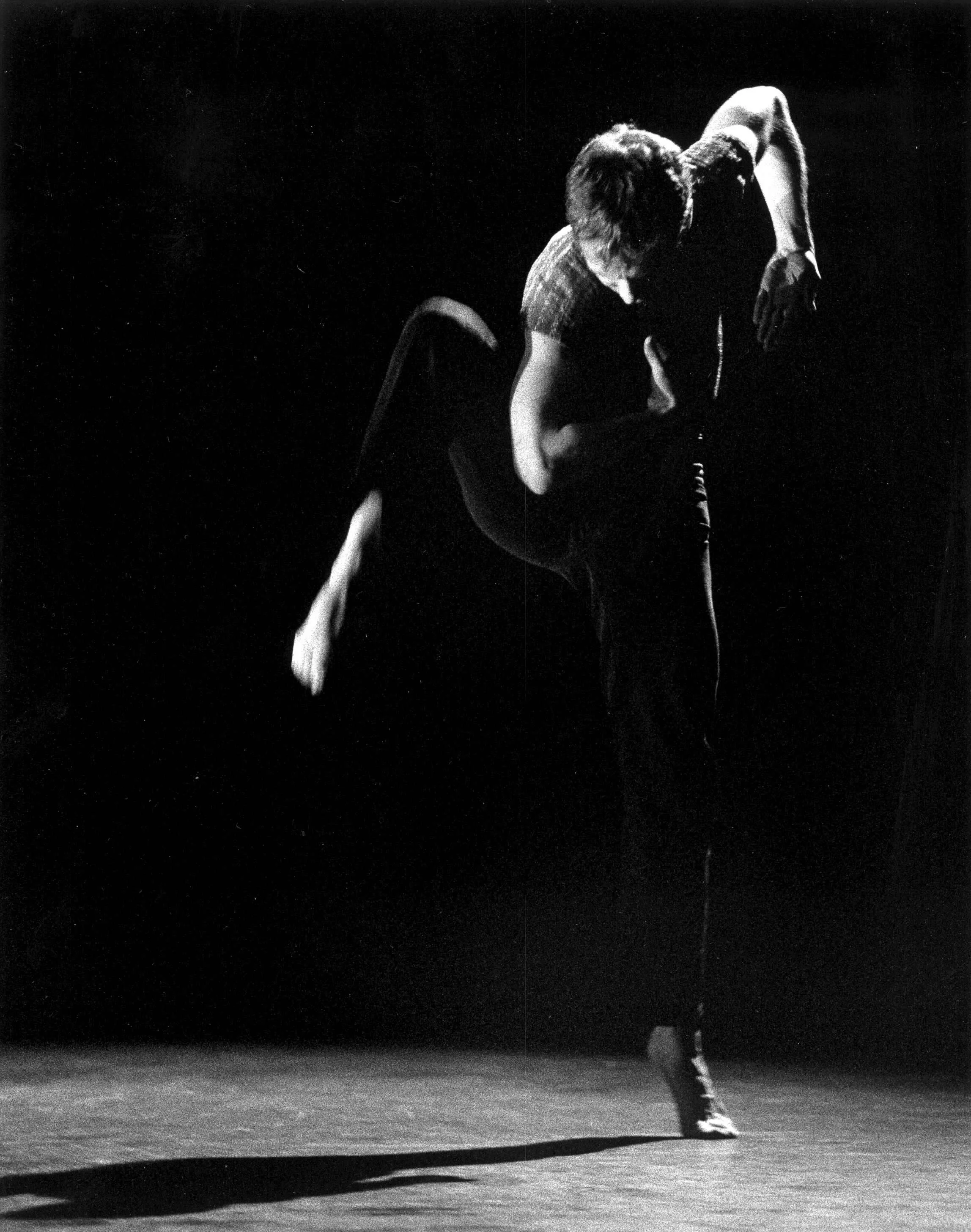
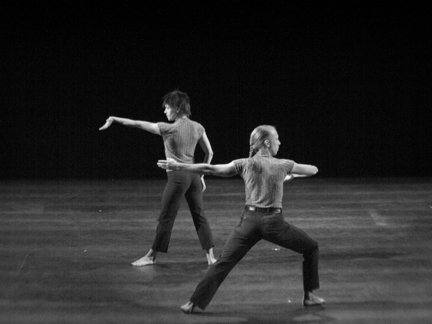
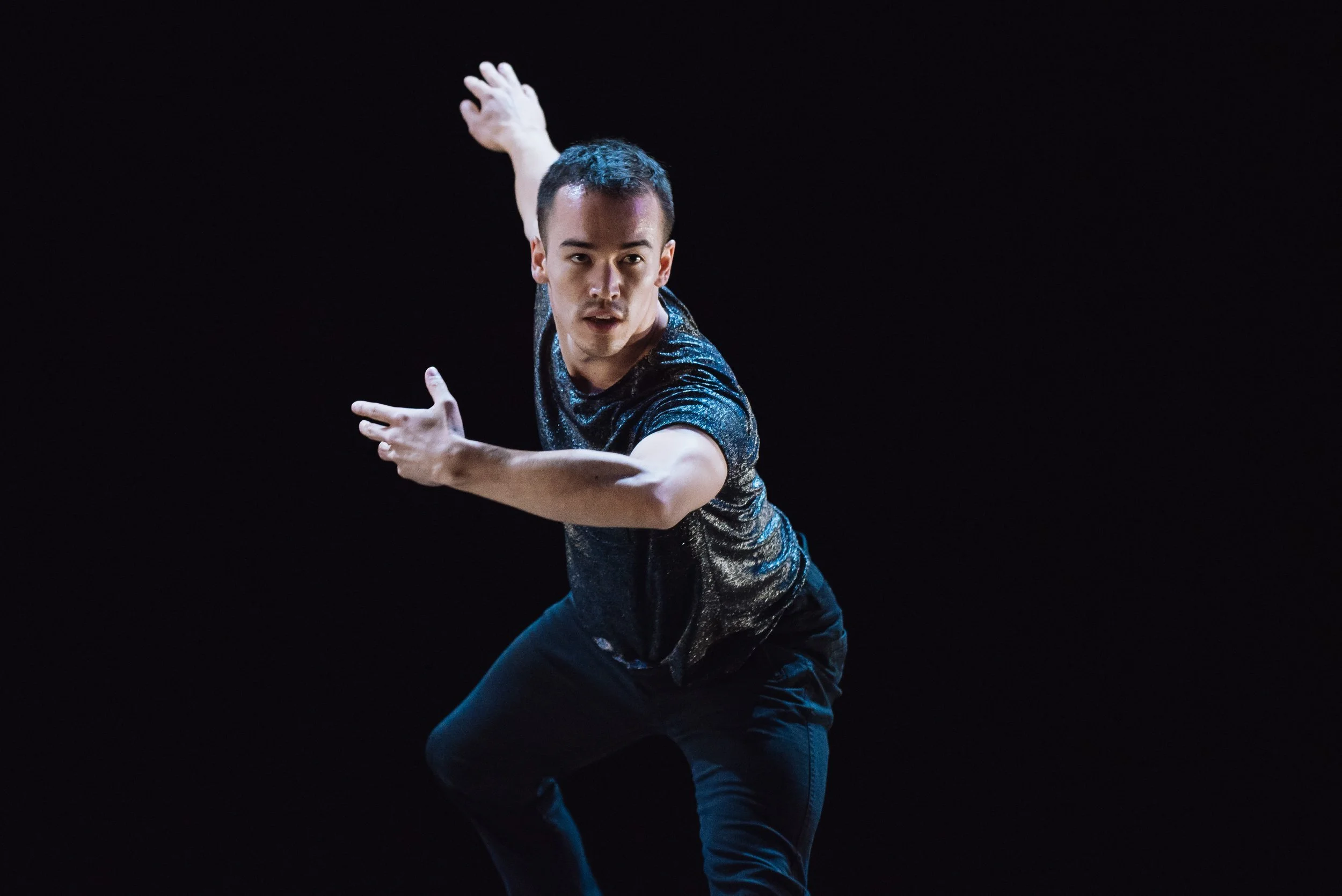
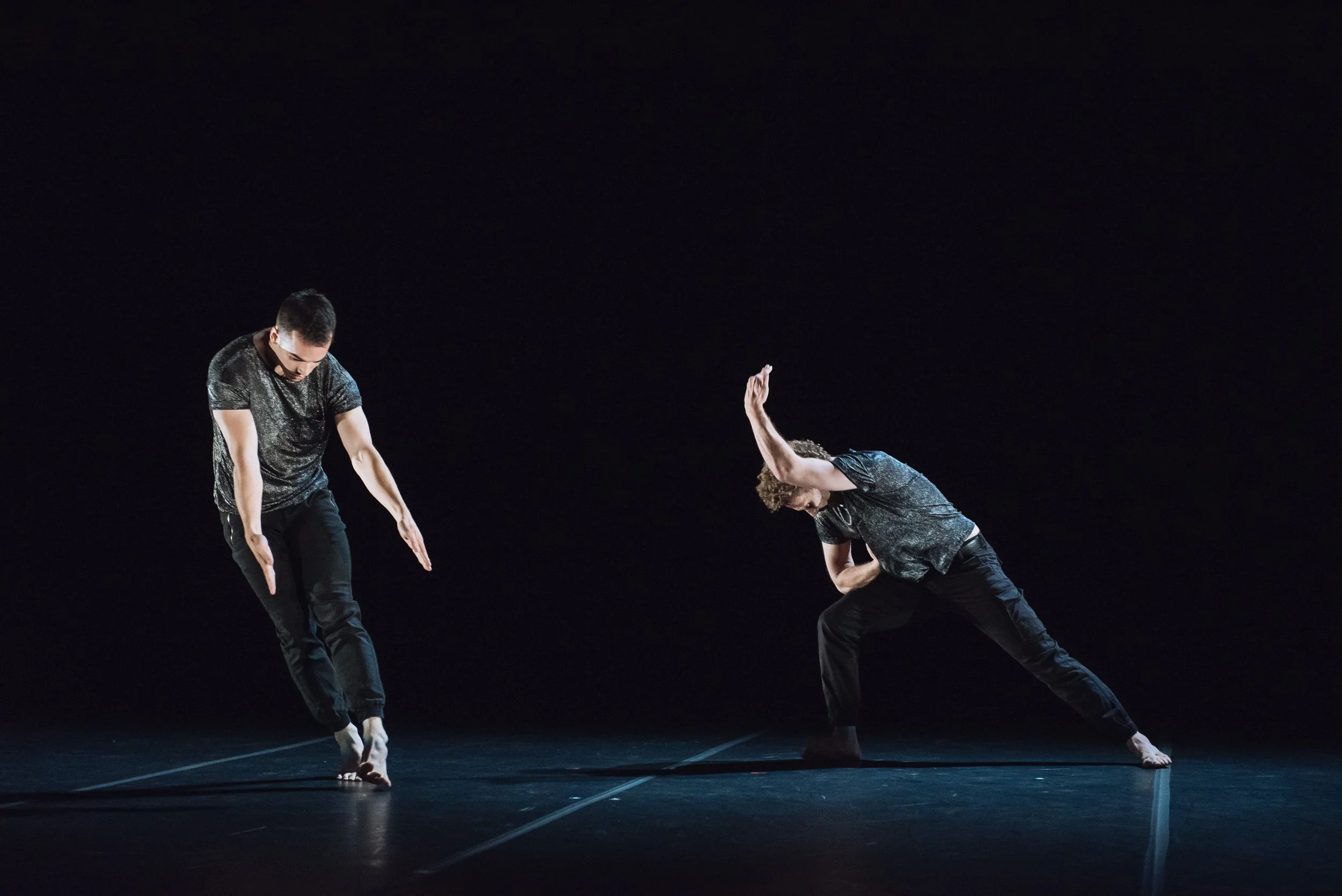
If you’ve been following the blog for a while, you’ll know that by 1999, pianist Andrew Burashko and dancer Peggy Baker had been touring Canada and the USA together for almost a decade. They often included a piano work for Andrew to perform without any dance, and in this week’s blog Peggy recounts how Andrew’s choice of Piano Music No. 2 by John Cage led to the creation of furthermore:
“For this particular composition, Cage had employed the chance procedure of taking flaws in the manuscript paper on which he was notating and assigning them musical notes, some of which would be played on the keyboard, and some by striking or plucking the string directly, reaching inside piano. This piece therefore required that the musician stand at the piano in order to be able to play both the keyboard and the strings simultaneously, while also shifting their weight to extend a leg to work the pedals that sustain or dampen notes. I found the movements required of Andrew quite beautiful, and highly choreographic.
In the fall of 1999 Andrew presented his first recital program for a new music performance initiative under his artistic direction, Art of Time Ensemble. Contemporary music by Americans John Cage, Peter Lieberson, George Crumb, Sebastian Currier ,and George Gershwin was brought together in a program titled Fascinatin’ Rhythms. Along with Andrew, the stellar musicians on the program included Steve Dann (viola), Beverley Johnston (percussion), Barbara Hannigan (soprano), and Joel Quarrington (double bass). I danced to Cage’s Piano Music No. 2, and my choreography was an elaboration on Andrew’s actions so that the work became both a piano solo and a movement duet. I titled the premiere and, moreover, and later renamed it furthermore, though I can no longer imagine why I thought it needed to be changed…” PB
To read more about how John Cage redefined music, visit NPR here.
Art of Time Ensemble has become a live performance juggernaut in Toronto. Andrew’s company presents an annual season of concerts that fuse high art with popular culture. To listen to a selection of their recordings visit Soundcloud here, or their YouTube channel.


Sylvan Quartet (1999)
For their tenth anniversary concert at the University of Toronto’s Walter Hall, the chamber group Amici – with then-members Joaquin Valdepenas (clarinet), David Hetherington (cello) and Patricia Parr (piano) – invited Peggy to create a solo choreography to be performed to Chan Ka Nin’s I think that I shall never see… written for Amici in 1993. Peggy explains further:
“Ka Nin had composed this work with a scenario concerning the environmental dangers of deforestation and identified each instrument with a “character” central to this issue, (cello/tree, clarinet/bird, piano/woodcutter). Initial performances of the work included staging and performance devices to illustrate the composer’s notions. For this anniversary concert, I was invited to create a completely re-visioned staging.
Choreographically, I set out to embody the equivalent of a fourth line of music in the score. Just as the musicians do not play non-stop in this work, but each have a line of music that includes entrances and conclusions, moments of great presence and passages of subtle support, I shifted among varying degrees of visual prominence. Between choreographic episodes I walked quietly to my next starting place, with the resets planned to allow for a moment of stillness proceeding each new sequence. Fleeting images of the composer’s original characters emerged and dissolved from time to time through my body. I positioned the musicians as far apart as possible, both to create space in their midst that I could move through, but also to set up a spatial and auditory tension among the musicians so that they were functioning at a vulnerable threshold. My overarching aspiration was to match the superb artistry of the composition’s abstraction, the clarity and depth of the musician’s performance, and to bring the dance into the work as a fully integrated visual/kinetic element.
Ka Nin embraced my presence in his inspiring work with incredible grace and generosity, and it was a rare treat and a great honour to dance within a performance of his music by Joaquin, David, and Patricia.” - PB
To read more about what you can do to stop deforestation in Canada visit the Wilderness Committee.
The pianist featured in the YouTube link to I think that I shall never see above is David Maggs, currently an Innovation Fellow at The Metcalf Foundation and author of a profound paper called Art and The World After This, highly recommended for folks working in the performing arts and trying to figure out what to do in the face of the COVID-19 pandemic, expansive new technologies, the climate crisis, and the urgency for racial justice and equity. Get comfy though, it’s not a quick read.


Strand (1997)
In 1997 Peggy Baker Dance Projects joined forces with Toronto Dance Theatre - led by Artistic Director Christopher House – and Arraymusic – led by Artistic Director Michael J. Baker – to co-produce and co-present a two-week performance run of dance and live music titled musicDANCEarray. TDT and Peggy each had their own concert program featuring live music performed by members of the Arraymusic ensemble; and Arraymusic’s program included works contributed by both of the dance companies. This week Peggy looks at one of the new works on her program for this season, entitled Strand.
“One of two premieres for me was Strand, performed to a delicate, spare and nuanced piano score by Ann Southam. I had known Ann’s music since in the early 1970s through the repertoire of Toronto Dance Theatre, and I had first danced to one of her electronic scores in 1974 for Anna Blewchamp’s powerful and disturbing Arrival of All Time. When I approached Anne for a solo piano piece, she offered Spatial View of Pond, which had been commissioned by Arraymusic for pianist Henry Kucharzyk, so it was a perfect fit for our shared project.
Strand was choreographed bar by bar to Ann’s music with the movement arising as a response to phrases of text extracted from the writing of American author May Sarton, whose journals eloquently chronicle the way in which our lives arise through the detail of each small act. For the dance, Ann allowed me to have the pianist release the sustain pedal to cut the last note off at the moment that my final gesture completed.
The photographer V. Tony Hauser invited me to dance Strand for his camera, and his portraits – which I love – capture the essence of gesture and unguarded emotion that lay at the heart of the dance.”
Discover more about May Sarton’s journal writing here on newcriterion.com.
Completely unrelated, but awesome nevertheless, read about Ann Southam’s extraordinary contribution to the Canadian Women’s Foundation here at cbc.ca.

Photos of Peggy Baker by V. Tony Hauser

Pelléas et Mélisande (1997)
This week’s blog looks at the only show in the Peggy Baker Dance Projects’ repertoire to feature an orchestra! Peggy describes how she came to share the stage of Roy Thompson Hall with the Toronto Symphony Orchestra:
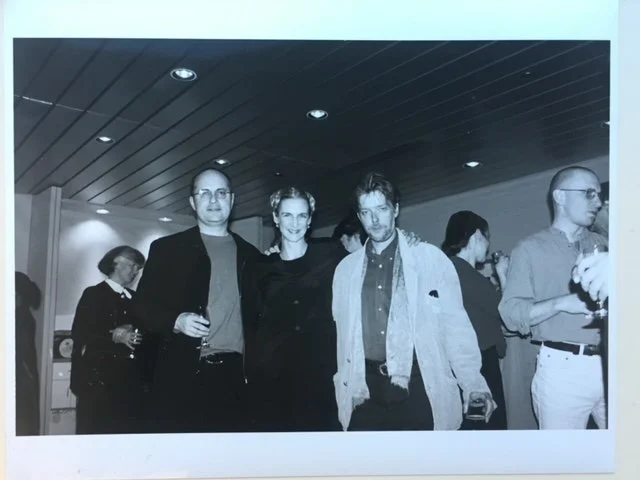
“My creative partnership with pianist Andrew Burashko attracted music audiences to our performances, including, in 1996, the Toronto Symphony Orchestra’s Assistant Artistic Administrator, Joanne Harada. Her excitement over seeing work that brought contemporary dance and live music on stage together led to an invitation from TSO Music Director Yukka-Pekka Saraste for me to perform on a concert program with the orchestra. Yukka-Pekka chose a program of three works all based on Maurice Maeterlinck’s Pelléas et Mélisande, an ill-fated love story that inspired darkly lyrical music invoking images of heady romance, tumultuous unraveling of expectations and a tragic outcome.
I turned to James Kudelka as a choreographer who could handle the demands of narrative and character, as well as the magnificent but challenging possibilities of having a single dancer share a concert hall stage with an orchestra. The program opened with a chamber orchestra of 30 performing Fauré, Pelléas et Mélisande, opus 80; progressed to a full orchestra for the Sibelius, Suite from Pelléas et Mélisande, opus 46; and then to an augmented orchestra of more than 100 players for Schoenberg’s Pelléas and Mélisande: Symphonic Poem, opus 5.
As the orchestra grew, the space in which I danced shrank until I was dancing in a space of only about 6 feet by 6 feet, virtually back-to-back with Yukka-Pekka. The power of dancing in such close proximity to the orchestra and the conductor was overwhelming. At times the music hit me with the power of surging water and though the allusion sounds crazy, and also quite funny, I felt as though I was a surfer riding the crests and curls of the sound.
Jane Townsend designed and constructed a series of incredible dresses for me, each appliquéd with motifs of flowers and leaves. The massive skirt of each dress fell heavily as I stepped and then billowed wide with every turn. James’ choreography was rich and grand, full of jumps and spins. This dance was performed just twice with the TSO and has never been staged again, and not a single photograph of this dance exists. But the experience of dancing at Roy Thompson Hall with the Toronto Symphony Orchestra under Yukka-Pekka Saraste, in a work created for me James Kudelka in dresses by Jane Townsend was absolutely unforgettable, and I hold it as one of my most treasured memories.”
From James Kudelka: “What I really remember is the rehearsal with the orchestra in the afternoon of the premiere, with just the TSO musicians and the conductor and Peggy on the stage and me watching her dance these three dances without any of the problem of wondering if it was anything more that just artists at work, with no one else watching, and thinking that I was a very lucky man to be collaborating with such a magnificent group of people.”
“If the Baker-Kudelka contribution was the briefest of the concert, it was also the most vivid.The dancer would always appear at some point midway through the music, her arrivals and departures had an uncanny air of mystery, like Mélisande in the play - and fill what limited space was available to her… But Baker doesn’ need a lot of room to be eloquent… she was an immense force even in a tiny area.” Urjo Kareda, The Globe and Mail
To read more about story-telling in classical music, visit WQXR here and see Jukka-Pekka Saraste in action, conducting Sibelius’ Lemminkäinen Suite.


One Voice (1997)
Back in 1990, Winnipeg-based choreographer, educator, and dance advocate Stephanie Ballard made a solo on Peggy set to Song from the Thracian Plain sung by the Bulgarian State Television Female Vocal Choir. Part of a larger work of Stephanie’s called Continuum, this untitled solo found new life seven years later.
Stephanie writes: “Peggy Baker is an extraordinary dance artist. A Canadian jewel. Her unique ability to fulfill movement with power and clarity has inspired me since going across the floor with her at the Toronto Dance Theatre studios in 1973. The creative point of departure for this solo for her came from my interest in the Bird Goddess as described by Marija Gimbutus in her book The Language of the Goddess. Peggy was able to embrace the statuesque and spiritual qualities that numerous bird goddess images and stories portrayed. Our creative process embraced primitive and contemporary movement.” SB
Peggy adds: “I always loved this solo from Continuum, and wondered if it would stand on its own without music. I planned to include it on a program for which all of the other music was performed live. Stephanie very generously allowed me to premiere the solo - which we titled One Voice - in silence for musicDANCEarray in March of 1997. I was thrilled by performing the distillation of this work, and danced it on a several different programs over the next few years.” PB
Collaboration. Evolution. Refinement. These are recurring themes in Peggy’s work and process, and this project with Stephanie is a wonderful example.
PS - Stephanie also wrote “I loved Peggy’s idea to perform the work in silence - and it worked!”
"... the dance equivalent of a performance by a legendary singer...her concentrated movements, in silence, invoke a soulful music." Susan Walker, The Toronto Star
To read more about Marija Gimbutus and her book The Language of the Goddess visit The LA Times here.


a true story (1997)
This week’s blog post looks at the first dance story that Peggy created. It foreshadows a deep interest in drama, text, and vocalization that she will explore in the coming years, working with artists such as Sarah Chase, Denise Clarke, Michael Healey, and Fides Krucker.
“An invitation to perform at a fundraiser for the December 6 Fund demanded some deep thinking about how to contribute something relevant as a dancer. The Fund provides interest-free loans to women in the Toronto area working to extricate themselves from violent relationships, and their May 1997 event was titled Reclaiming Mother’s Day: A Critical Celebration of Motherhood.
When Ahmed Hassan and I married in 1990, I joined the household he shared with his 13-year-old daughter, for whom he had sole custody, and so became her stepmother. “Stepmother” – what a loaded word. So harsh and intrusive sounding, so laden with negative connotations. I developed a true story, a text and movement piece that unpacked my struggle with that word and with its eventual replacement by a word coined by the young child of a close friend.
For that first performance, I wore street clothes, including my Blundstones, standing at a microphone on the small stage at Trinity St Paul’s United Church. The program was extremely moving and included a performance by Tafelmusik and spoken contributions by actors Shirley Douglas, Linda Griffiths, and Elizabeth Sheppard; writers Irshad Manji, Susan Swan, and Stevie Cameron; politician Olivia Chow; and comedians Diane Flacks and Sandra Shamas. Diane Flacks followed me on the program and when she approached the mic imitating my walk before turning to me with a huge beaming smile I flushed red and felt my heart race at the thrilling embarrassment.
I found it incredibly potent to speak while dancing, and the piece landed for me with a tremendous resonance. I went on the perform a true story many times over the next 20 years.” PB
“Ms. Baker, a Canadian whose superlative dancing and clever choreography are well known in New York, started off with a true story. Her initial stamps, violent torso rotations and emphatic arm folding seemed like pure dance. Suddenly the gestures were imbued with dramatic meaning and illustrations of words spoken by the dancer.” Anna Kisselgoff, The New York Times
To watch the parentally-themed comedy stylings of Diane Flacks, visit YouTube.com here.


Encoded Revision (1997)
By 1996 Peggy and pianist Andrew Burashko had a repertoire that included 19th century western music by Brahms, Chopin and Liszt, early 20th century music by Tcherepnin, mid century compositions by Prokofiev and Cage, and one late 20th century new music work by American composer Peter Garland. What would be their next focus? Peggy fills us in:
“When I opened a conversation on commissioning a new work, Andrew immediately suggested Michael J. Baker who was extremely active in the Toronto music scene as a composer, conductor, and multi-instrumentalist and had been composing for dance since the early 1970s. We quickly agreed on Michael (whose last name I share because we had been married for 12 years of our young adult lives) and were ecstatic when my newly incorporated company, now called Peggy Baker Dance Projects, secured our first ever grant to commission the music.
The score for Encoded Revision requires a performance of post-modern virtuosity by the pianist who is constantly shifting metre and tempo, has text to deliver throughout and is also called upon to manipulate the score pages as props within the choreography. I loved performing this dance, but the choreography did not meet its potential until it was revived with Benjamin Kamino 16 years after its premiere.
The program notes give a full overview of the form and content of the piece:
The creation of this work was based on the literary form of the palimpsest: a document written upon several times, with remnants of earlier, imperfectly erased writing still visible. A palimpsest simultaneously documents and destroys its own history, encoding the original text within a revision.
Buried inside of Encoded Revision, and serving as the original document for the musical palimpsest, is a newspaper account of the tragic death of the composer’s great grandfather in a train accident on the Canadian prairies in 1898. Three generations later the story existed only vaguely in the family’s oral history until it was recovered more completely through the composer’s research. In every available account – newspapers, CPR telegrams, and North West Mounted Police reports – this intriguing bit of information surfaces: “A tramp, who was stealing a ride, was slightly injured, and started walking east after he had his breakfast.” I dance the role of the tramp in Michael’s story.” PB
“Encoded Revision…dates back to 1997, and the intervening 16 years has not dimmed its raucous swagger. … Everything about this solo works. The high octane energy of the dance itself. The sporadic bits of text shouted by Kamino and Farah. The visuals of the flying music paper. It is an utterly engaging romp…” - Paula Citron, The Globe and Mail
To learn more about palimpsests, watch Contemporary Art Theme on YouTube.


Notes on a Collaboration
For this week’s blog, Peggy’s collaborator for twenty years, pianist Andrew Burashko looks back at their prolific partnership:
When I first met Peggy in January of 1991, I was at the threshold of a career as a concert pianist - a career I only ever imagined as a soloist, sometimes sharing the stage with other musicians - a solitary pursuit with not much room for anything else. I knew nothing of modern dance or any other kind of dance for that matter; and I only knew of Peggy Baker as the ex-wife of the composer Michael J. Baker with whom I had worked.
Peggy had just returned to Canada after a decade in New York and was looking for a pianist to perform a work that Mark Morris had given her as a gift when she left White Oak Dance Project. It was a work titled Ten Suggestions which was choreographed for solo dancer to Ten Bagatelles for solo piano by Alexander Tcherpnin. When Peggy first reached out to me, I saw it as a gig that would earn me some sustenance between ‘real’ engagements - solo recitals and concerto appearances. It seemed like a compromise - a job for a pianist incapable of commanding the stage on their own. This was my fragile, young ego talking, of course.
I remember showing up at the first rehearsal with a metronome to capture the exact tempi Peggy wanted, imagining that I would need to follow her. It was a relief to learn that she wanted me to play the music as I felt it. That was the beginning. For the next twenty years of our collaboration she encouraged me to choose the music – pieces I yearned to play – and allowed for my interpretations to inform her choreography. It was a revelation to see the music I was playing manifested in her movement. Not only in terms of her expression but also as a counterpoint. When making music with other musicians, everyone must be on the same page emotionally and intellectually. It’s not possible for one musician to be still or serene while a musical storm is raging around them. It was a shock to see her choreography seemingly contradict instead of mirror my idea of what the music was saying. It brought another level of nuance to my understanding of music.
Peggy also revealed an entirely new world to me by exposing me to the remarkable discipline and beauty of dance; and by helping me discover a new paradigm for myself as a classical musician. She brought me out of the spartan environment of the concert hall and into the magical and mysterious world of the theatre – lighting, staging, the possibilities of creating another world for the music – things I had never considered before and that I embraced and incorporated into Art of Time concerts.
The lessons were plenty and the growth profound. In short, I wouldn’t have found the path I am on today without having met Peggy.
Thank you dear friend. AB

Why the Brook Wept (1996)
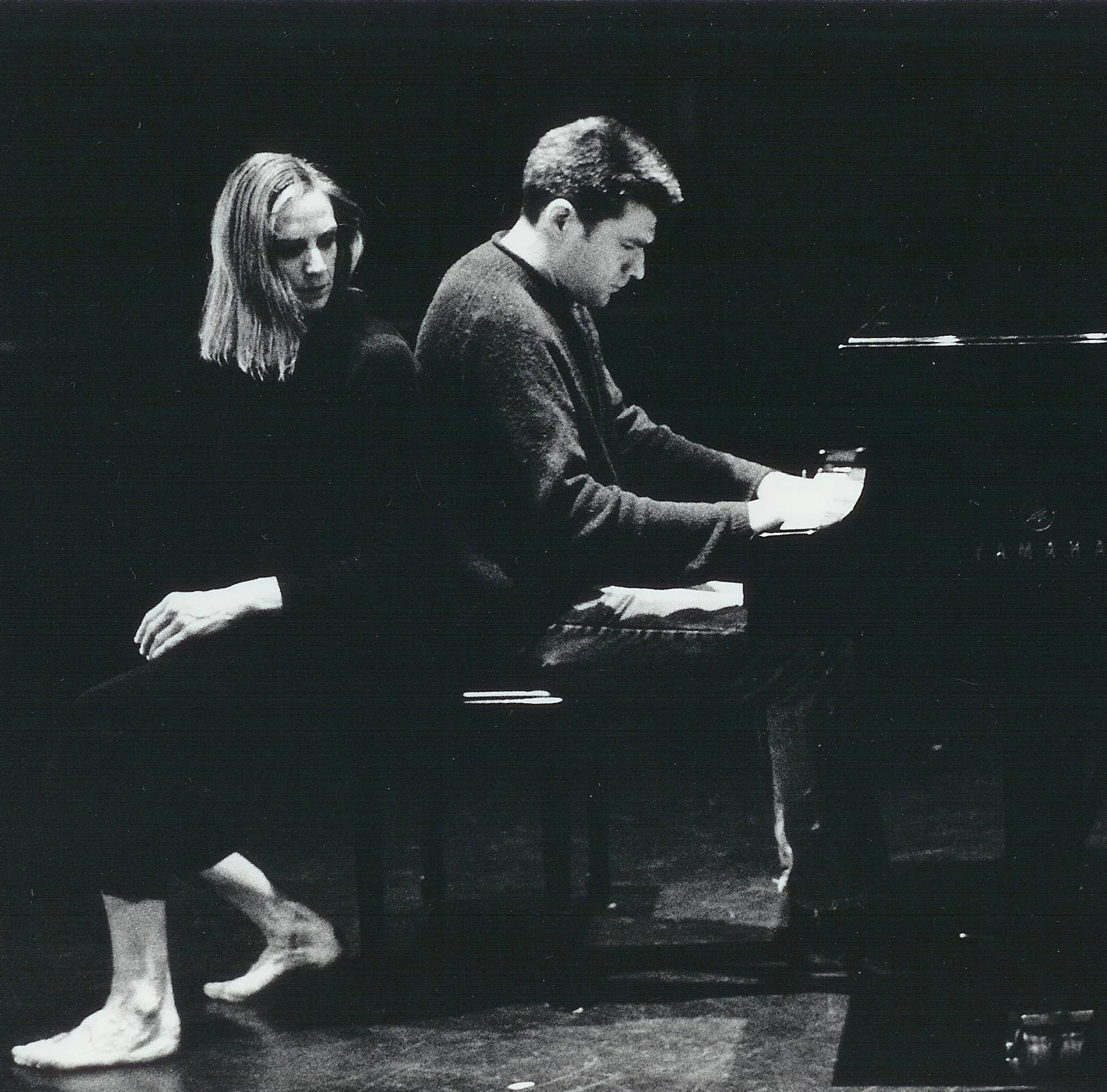
As Peggy Baker and Andrew Burashko continue developing their repertoire together, Andrew suggests another John Cage score, Ophelia, composed for the American dancer Jean Erdman in 1946. Peggy writes about her response:
“That the music had been written explicitly for a choreographic portrait of Ophelia from Shakespeare’s Hamlet was both compelling and intimidating, and I hesitated to take it on. But the more I listened to the music, the more amazed and fascinated I was by the ways in which it captured Ophelia’s dilemma. Finally, I could not turn away.
To begin with, I worked strictly with the script of the play developing sequences, scenes and images based on the text. Once I had worked my way through the words I went back to the music, allowing the score to guide me in arranging, distilling, and refining the choreography. Also very much on my mind was the John Everett Millais painting Ophelia, (1851-2), which I had seen at the Tate in London many years earlier. I chose not to research the original choreography, so there are no intentional allusions to Erdman’s dance in my own. The description of Ophelia’s death as a fall “into a weeping brook” inspired my title.
One of the most potent images the music inspired for me was the idea of the pianist as Hamlet, and his performance of the score as his own wrenching self-interrogation. So the piano is positioned in profile on stage left, with the pianist’s back is to the dancer. At the end of the piece, the dancer is left on the floor, crumpled against the back legs of the piano bench, and once the final notes have decayed, the pianist closes the keyboard, stands and closes the piano’s lid and exists the stage. Whenever we performed this work, it closed the program, including on Art of Time Ensemble’s program, If music be… first staged in 2010.” PB
“The two dance sequences are beautifully rendered: Tanya Howard and Patrick Lavoie, as choreographed by James Kudelka in the Act III scene where Romeo and Juliet part after a night of lovemaking; and the remarkable Peggy Baker dancing Ophelia’s madness to music of John Cage to close the show.”
- John Terauds, The Toronto Star
"Cage composed the music for a 1946 dance by Jean Erdman, but Baker has made it her own, as much acted as danced. She passes through a full spectrum of moods, from languor to frenzy. When Burashko closes the piano and leaves her fallen figure on the stage, it is the spirit leaving the body."
- Susan Walker, The Toronto Star
To learn more about the work of John Cage watch John Cage. From Zero here on Youtube.


Savanna (1995)
Peggy commissioned a second work from Molissa Fenley, and like Inner Enchantments before it, Savanna would enter the repertoires of both artists. But the circumstances around this later commission were quite different, as Peggy recounts here:
“In January of 1995 Molissa sustained a severe knee injury toward the end of her opening night performance of a week-long solo run at The Joyce Theater in New York City. The rehab from surgery was going to require many months. I knew that this sudden interruption to her creative life would be extremely hard on her and once she had her bearings I suggested this suddenly available time might be an opportunity for her to make me a new dance. My father offered a monetary gift as commissioning money for Mo and we set to work.
I had asked Molissa if she could choose music for piano so that the work could ultimately be performed with Andrew Burashko, and she chose a gorgeous score by Peter Garland, Walk in Beauty. Molissa led rehearsals sitting in chair, elaborating movements for the torso and arms with indications for turns, changes of directions and travelling patterns. I particularly love this solo, with its dark edges and fragility.
Savanna premiered in New York in December of 1995 as part of a four-part program of Molissa’s work for which I also performed Inner Enchantments. Michele Pogliana took on the 1993 solo Tilliboyo (to music by Foday Musa Suso), and Molissa premiered an exquisite new work, Regions, which opened with her dancing in the same chair she had sat in to choreograph Savanna..” PB
“I created Savanna on Peggy while I was coming back from knee surgery. I had started to create the dance before the surgery, and the video that I had of me dancing was really kind of scary! I was teetering, unsure of my balance, wavering - and yet I had convinced myself that I was dancing really well and even contemplated that maybe I didn't need to have the surgery. Well, luckily I did as that unsureness of step would have continued. Peggy was a delight to work with as I stumbled around trying to show her new sections - all great fun and sort of sad at the same time!” - MF
Read a review of the 4-part program at the 92nd Street Y here in The New York Times.
To learn more about Peggy’s dad - Murray F. R. Smith - and his ground-breaking work as a sports psychologist, watch youtube.com here


In a Landscape (1995)
The music and influence of John Cage is peppered throughout Peggy’s work, and it all began back in 1995…
“Pianist Andrew Burashko and I often gave one another books or CDs as gifts, and for our opening night at The Kitchen in New York in 1995, he gave me a CD of solo piano music by John Cage performed by Stephen Drury. The first track on the album was a piece from 1948 entitled In a Landscape. I instantly feel in love in with the music’s gently cascading melodies and the cresting and lulls of its compositional asymmetries. I lucked into an opportunity to perform a new work for fFIDA, (Toronto’s sadly no-longer Fringe Festival of Independent Dance Artists), and because Andrew was elsewhere, teamed up with pianist Henry Kucharzyk for the premiere.
The music took me inside of what I described then as my “creature body” – an interior world of sensations and movements riding the contours of joints and the pathways of blood, bone and muscle. The cycles of ritual that emerged elicited fragile balances and distortions that carved the lines of movement like the scarring and pruning used to cultivate a bonsai. Though this dance is brief, it moves through a timeframe that opens and elongates every second. The original staging of this work included a stunning costume by Jane Townsend – a kind of cocoon for the torso that left my bare arms and legs looking like the appendages of an insect – and a set of sculptural pieces by Kurt Swinghammer, some of which glowed at various times. Marc Parent, who lit this original version, later created a completely different treatment that called on the dancer to navigate a constantly morphing circle of light (imagine a rotating lava lamp projected onto the floor) that was devilishly difficult to balance within and which gave the impression of a dancer moving on a surface sliced out of the Milky Way.
I hold dear performances of In a Landscape with Henry, and later, and over many years, with Andrew. Performances of this dance by others, most especially Christopher T. Grider, Tanya Howard and Andrea Nann, have moved me deeply. “ PB
"A finely crafted solo, with carefully articulated movement perfectly matched to a John Cage composition." - Lewis Hertzman, Dance Magazine
“The estimable Andrea Nann puts her personal stamp on Baker’s 1995 solo In a Landscape; the choreographer’s own remembered presence in the same work hovers like a distant echo.” - Michael Crabb , The Toronto Star
Listen to Kurt Swinghammer being Interviewed by Steve Waxman here on The Creationists.
Watch the documentary John Cage. From Zero here on YouTube.
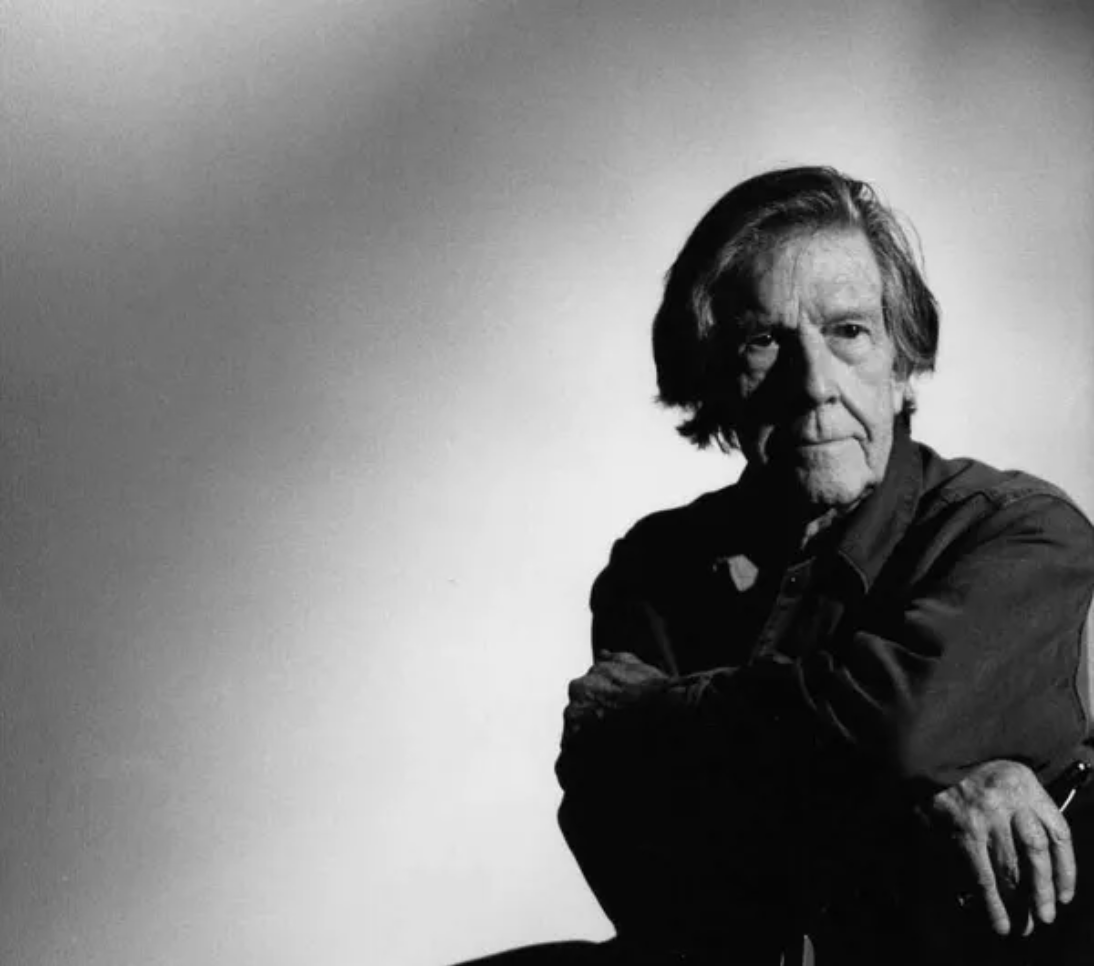


Assara (1995)
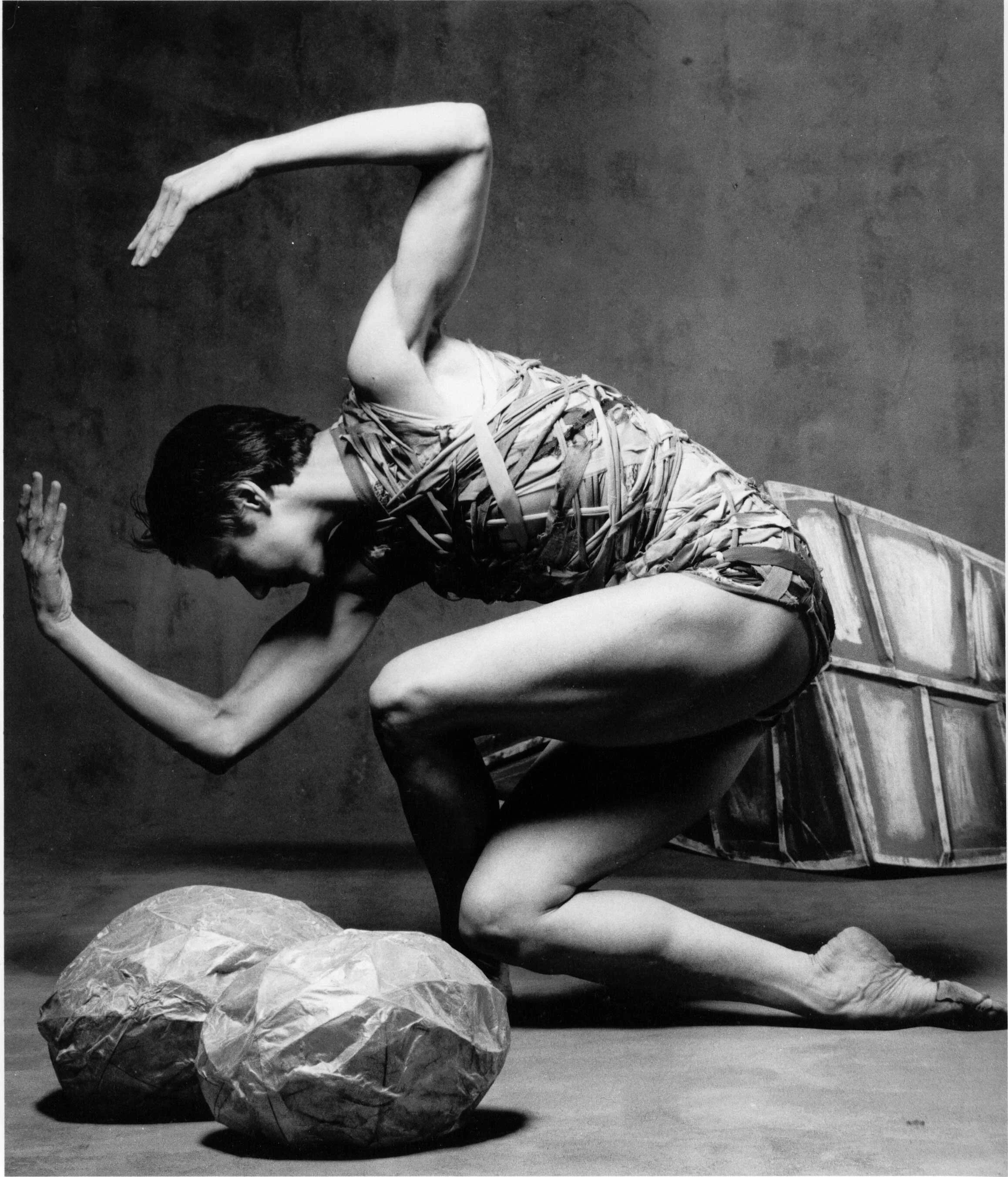
This week, Peggy looks back at a work choreographed for her by one of the founders of Toronto Dance Theatre, Patricia Beatty.
“Though she died in 2020, Trish will always remain a towering figure in my life. I met her in 1968 at a summer theatre school where she was teaching a daily movement class. The wisdom, sensuality and riveting immediacy of Trish’s dancing knocked me completely over. She inhabited her female body with grace and gravity. She spoke in the language of poetry - grand metaphors, invocations of the natural world, frank references to the body as the locus of desire, pleasure, intuition and creation. Up until that point I had aspired to become an actor, but from the day that I met her I understood that I had found my life’s work.
When I moved to Toronto in the fall of 1971 it was expressly to study with the company Trish co-directed, Toronto Dance Theatre. She always took my aspirations in dance absolutely to heart. Her guidance was honest and nuanced and she demonstrated through her dedication to the technique of Martha Graham that the physical practice of a dancer is an act of devotion. When, eventually, she was no longer capable of the rigours of Graham floorwork, she grieved the loss deeply. It was at this tremendously challenging time in her life that Trish suggested we once again intensify our relationship through the creation of a solo.
Trish’s highly specific and unique physicality permeated each of her dances, and it was an extraordinary experience to feel her impulses alive within my own body as I her danced her work. She was always extremely articulate about her choreographic intentions, so I’ll share her program note so that you can hear her speaking about this dance in her own voice” - PB
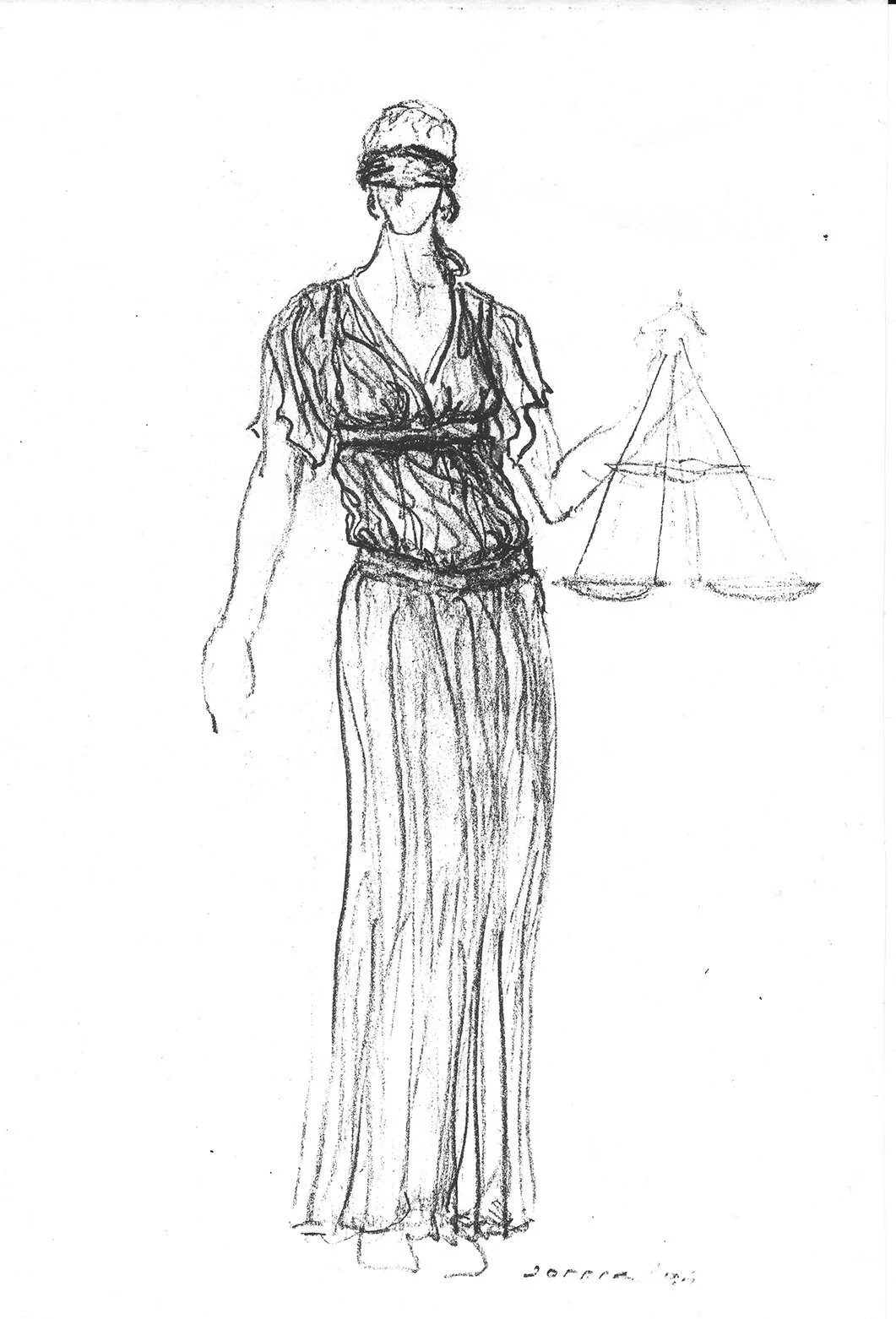
“Assara is a revered name from the ancient scripts of the pre-Hellenic islands of Crete and Cyprus. The word means pillar and it was used in these sophisticated civilizations to invoke the power of the Goddess. I have used it as a title for this dance about the renewal of true justice because we understand the symbol of a pillar of wisdom and a pillar of strength. The wise woman, once the central inhabitant of the female figure of justice, has been sadly and dangerously lost in our time. Where we look for fairness and compassion, we now see revenge and argumentativeness. This dance is a call for the renewal of true fairness and compassion in our thinking and practice of justice – it is also a call for the return of the wise woman into our lives and communities.” - Trish Beatty
To read more about the early years of TDT under the triumvirate leadership of Patricia Beatty, David Earle, and Peter Randazzo visit Dance Collection Danse here.

Black Border with Moving Figures (1994)
Hot on the heels of the creation and performance of Brute to Prokofiev’s Sonata No. 6, Peggy and Andrew immediately embark on another ambitious project.
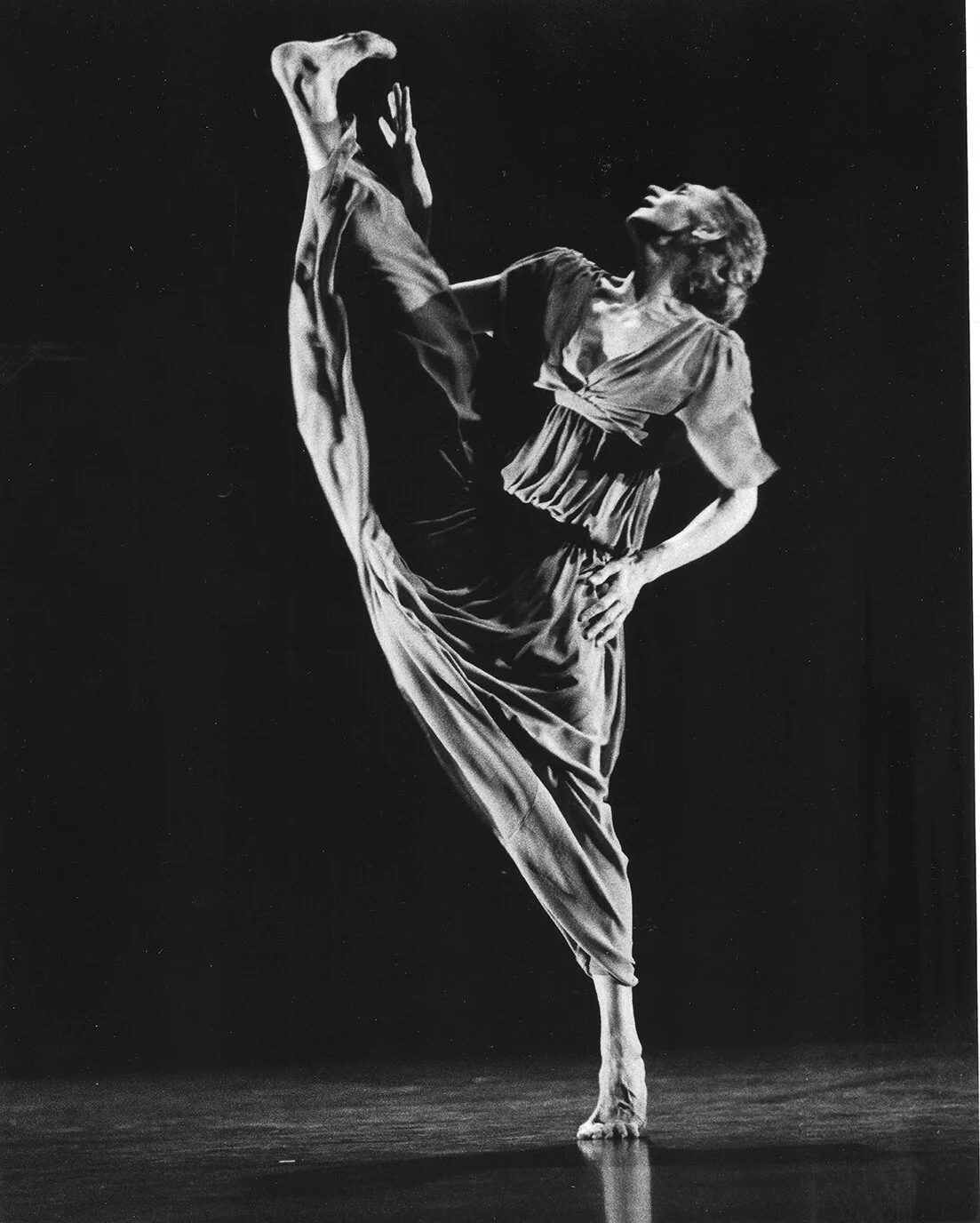
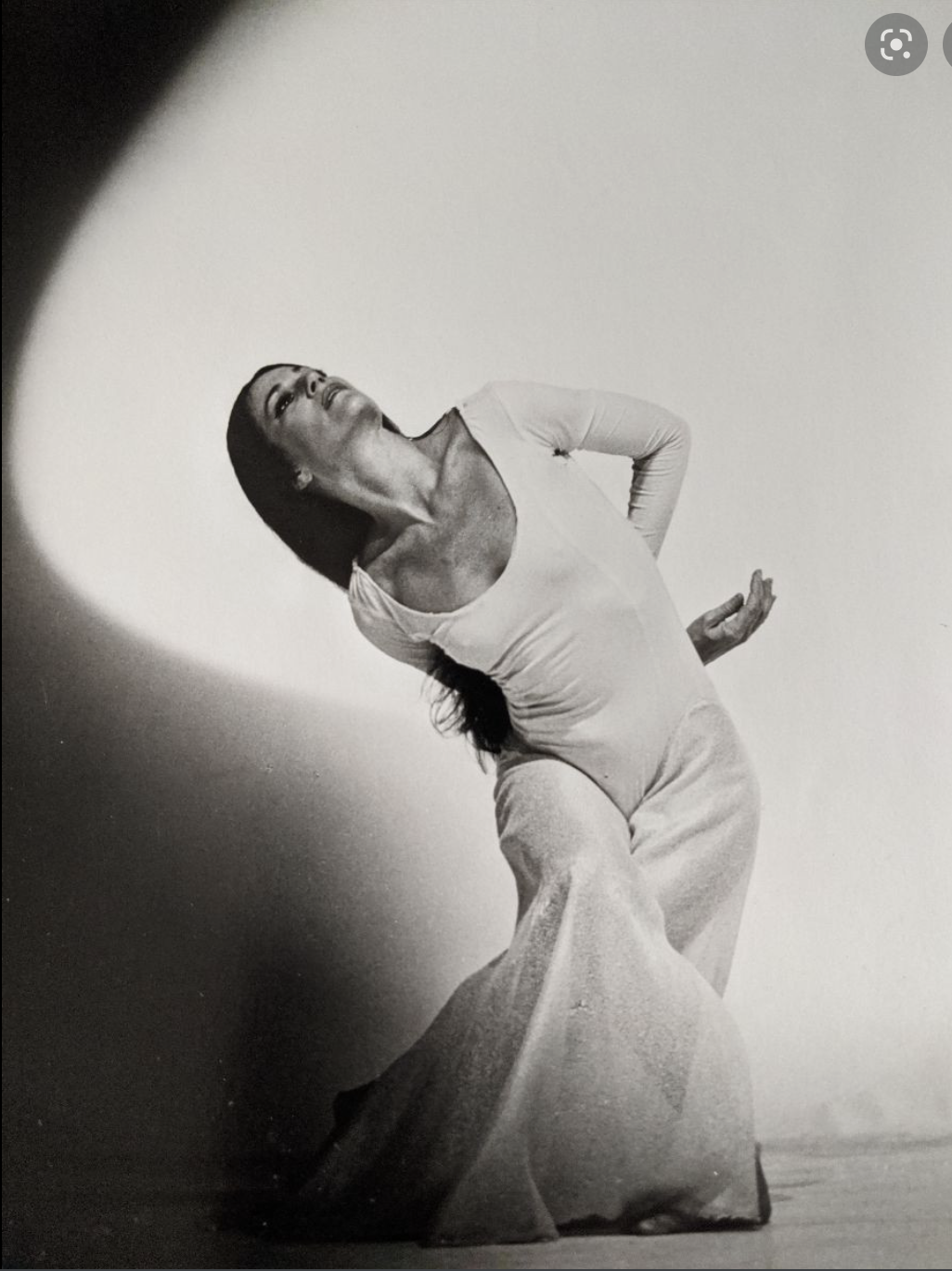
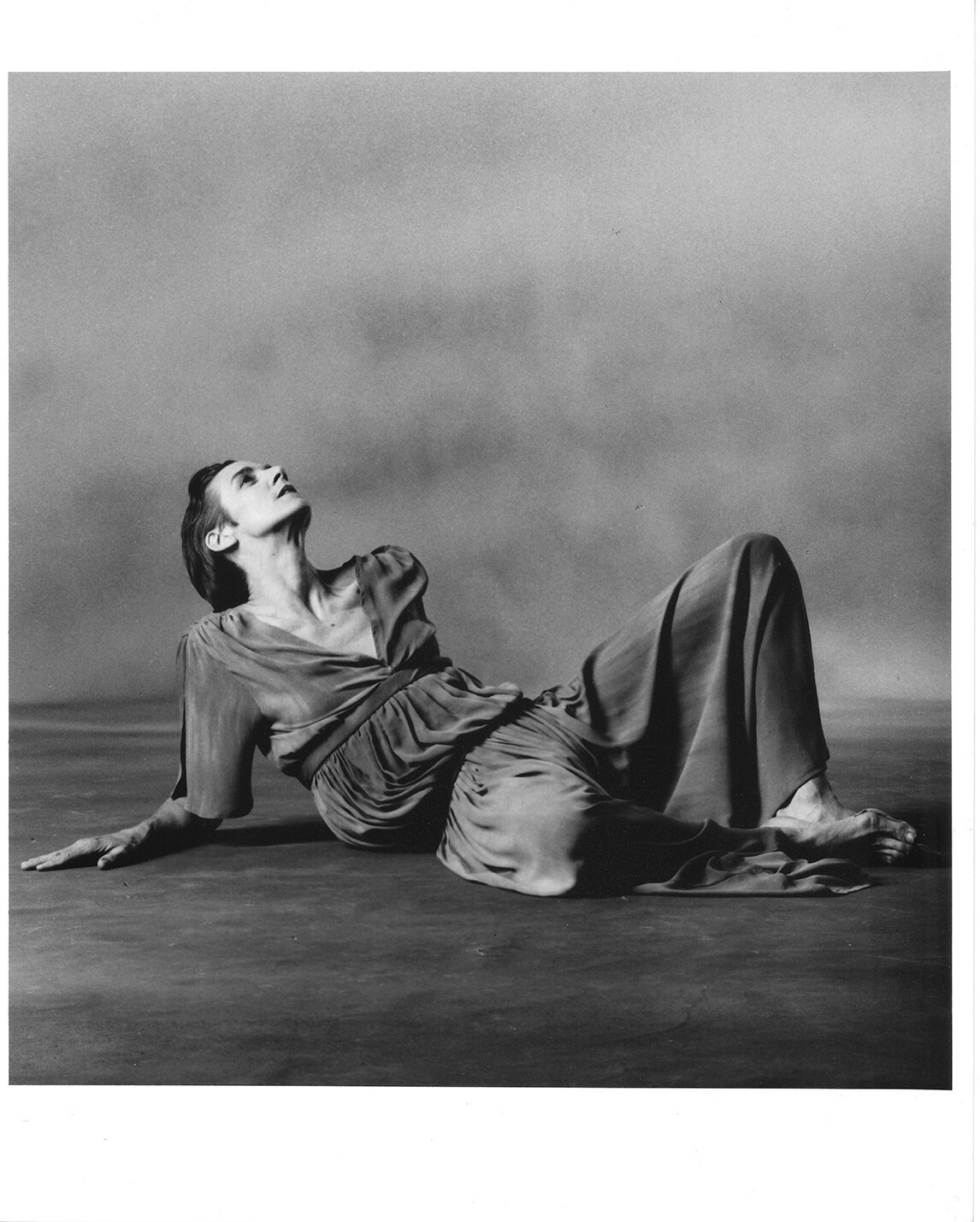
“I had given Andrew a copy of Wassily Kandinsky’s Concerning the Spiritual in Art and our conversations around the provocations it offered served as the entry for a new work. Kandinsky proposed the act of painting as an improvisation with colour, shape, line and form “independent from visual reality” that brought into existence a painting that communicated with the viewer on such a deep and significant level that it had the power to raise their consciousness. Andrew and I both appreciated the scope of this proposal in relation to our own art practice, and set out to dismantle in some way the framework of a dance to music. Working in silence, I developed 15 choreographic scenes, while Andrew choose works by Liszt and Chopin that place especially heavy demands for subjective interpretation on the pianist.
Coming together for rehearsal, I started with my 15 scenes in chronological order and allowed them to migrate until they were arranged in a sequence that was exciting and fascinating to dance to the music of either composer. The costume pieces for me by Caroline O’Brien could be combined in various ways and each time I exited the stage I returned in a different variation of the many possibilities.
Black Border with Moving Figures was a grand experiment that opened important and far ranging conversations between Andrew and I. It pushed us each to think about our practice differently, and expanded and deepened our collaboration. But I was never convinced by the work we made, and after the premiere in Toronto and performances at The Kitchen in New York, we set this piece aside.”
"Baker in one of her most rigorously modulated performances complementing the fire of Burashko's interpretations of Liszt and Chopin..." Michael Crabb, Toronto Star
“Peggy Baker, who is performing at the Kitchen through tomorrow night with Andrew Burashko, a pianist and fellow Canadian, is a dancer of startling power and fascination.
Audiences lost no time noticing her in Lar Lubovitch's modern dance company, where from 1981 to 1988 her big-boned dynamism was used with passionate sweep. Appearing since then as a charter member of Mikhail Baryshnikov's White Oak Dance Project and as a soloist, she has evolved into a dancer of striking physical projection.
Now in her own choreography, she knows how to focus on her expressive back and amazing long arms, fingers and legs; no one else dances with the same striking mix of formal severity, muscular force and strangely feminine allure.” Anna Kisselgoff, The New York Times
To learn more about Kandinsky, begin here at artsy.net.
If you read Ron Sexsmith’s joke in our Facebook or Instagram Creation Catalogue posts this week - and you liked it - follow @RonSexsmith on Twitter.


Brute (1994)
Since returning to Canada in 1990, Peggy had exclusively engaged Andrew Burashko to perform piano works with her live - Ten Suggestions, Brahms Waltzes, Her Heart, Romeo and Juliet Before Parting and Accident. - but it was with this major work, Brute, started in 1993, that their collaboration really started to cook…
“Andrew and I had a small number of short works we performed, which I programmed one or two at a time. But in 1994, I suggested the idea of creating a recital program together. I was imagining a program for the two of us with the musical integrity and ambition to stand on its own as a piano recital. “In that case,” Andrew responded, “we need to choose some important music”, and he provided a list of piano works for me to listen to and consider. I chose Prokofiev’s Sonata No. 6 in A major Opus 82. Composed in 1939/40, this is a work of epic proportions that holds within it the brutality, agony, perversion, and destruction of that time.
Early in the choreographic process I found myself overwhelmed by the scope of the music, but then a book gifted to me by my father (Howard Gartner’s Creating Minds) inspired the use of Picasso’s monumental painting Guernica as a primary reference. I was suddenly charged with choreographic ideas. The painting’s scale, its composition, the figures and objects it depicts, the history that it holds – all of the learning that arose from my research – is forcefully alive within the choreography, its essence vividly captured in the extraordinary costume by Jane Townsend and in Marc Parent’s sensational lighting.
Brute became the centrepiece of a concert program titled music for piano and solo dancer that premiered at the Queen Elizabeth Theatre for the Vancouver Recital Society in April of 1994. For the next 16 years Andrew and I continued to build a repertoire together with unforgettable performances in theatres and concert halls across Canada and in New York, Los Angeles, at Jacob’s Pillow, in Copenhagen, Ghent, and The Haag.” PB
"stark and disturbing" Kaija Pepper, Dance International
To read more about Picasso’s Guernica visit Artnews.com here.
To read more about this work, and the theme of androgyny in Peggy’s work, visit The Dance Current here.
To learn more about the genesis and creation process for Brute, watch the episode of Peggy’s Influences and Intersections below.


Geometry of the Circle (1993)
Now well into the third year of Peggy Baker | Solo Dance, Peggy is generating much of the new work herself, collaborating largely with Toronto-based musicians and composers. This early period of her work as a choreographer established live music as a distinguishing feature, with the musician not present as an unseen accompanist, but as an equal performance partner alongside her onstage.
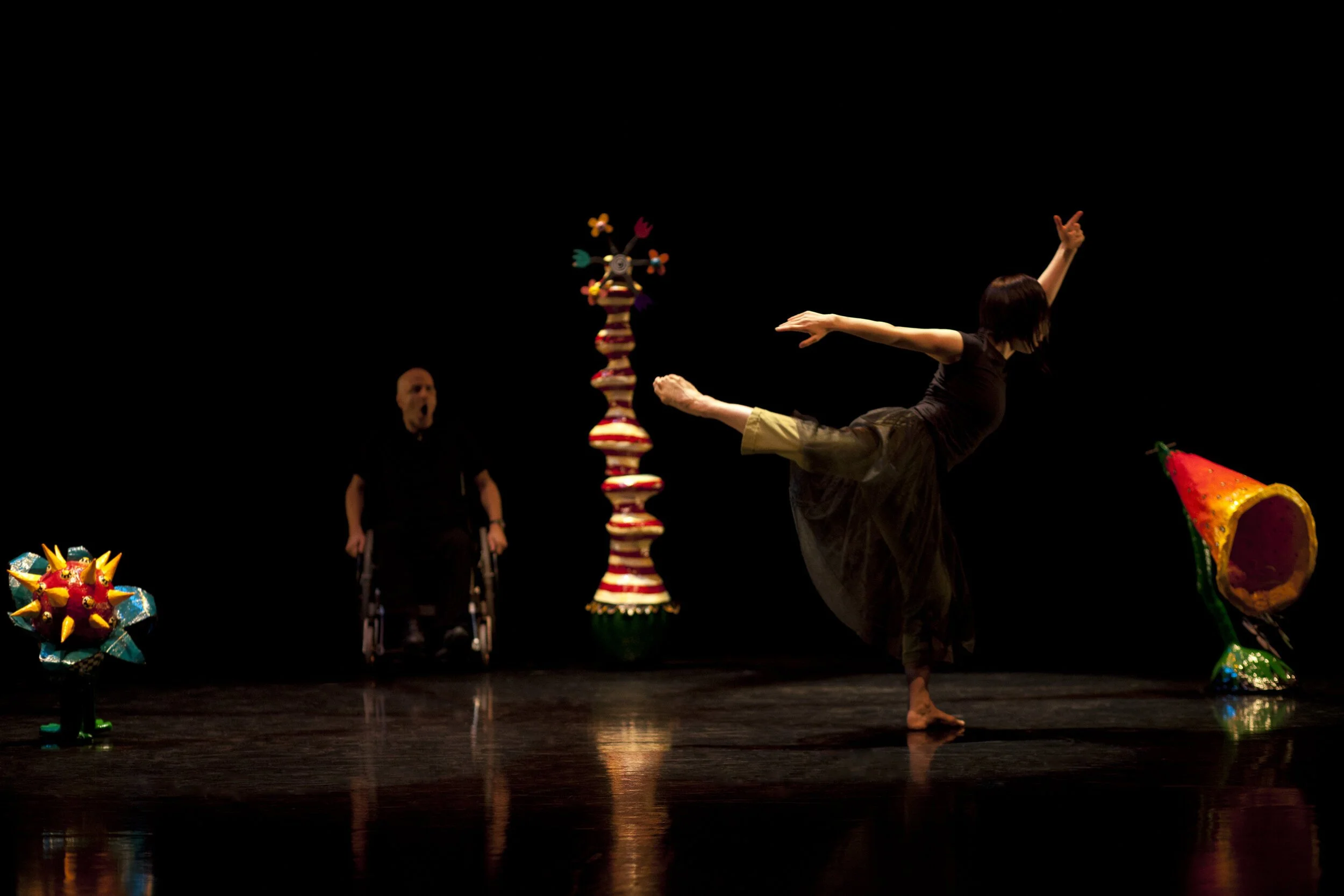
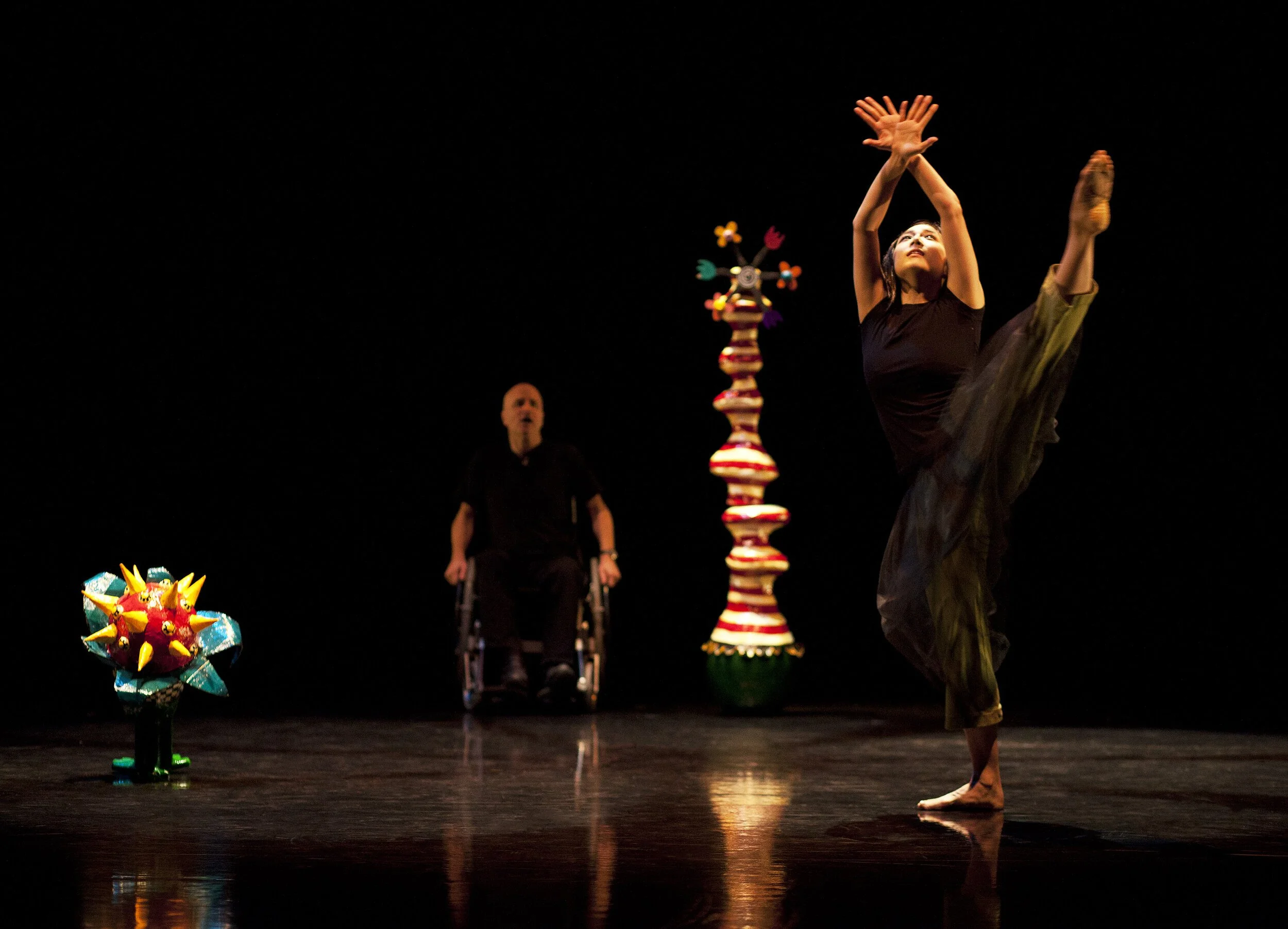
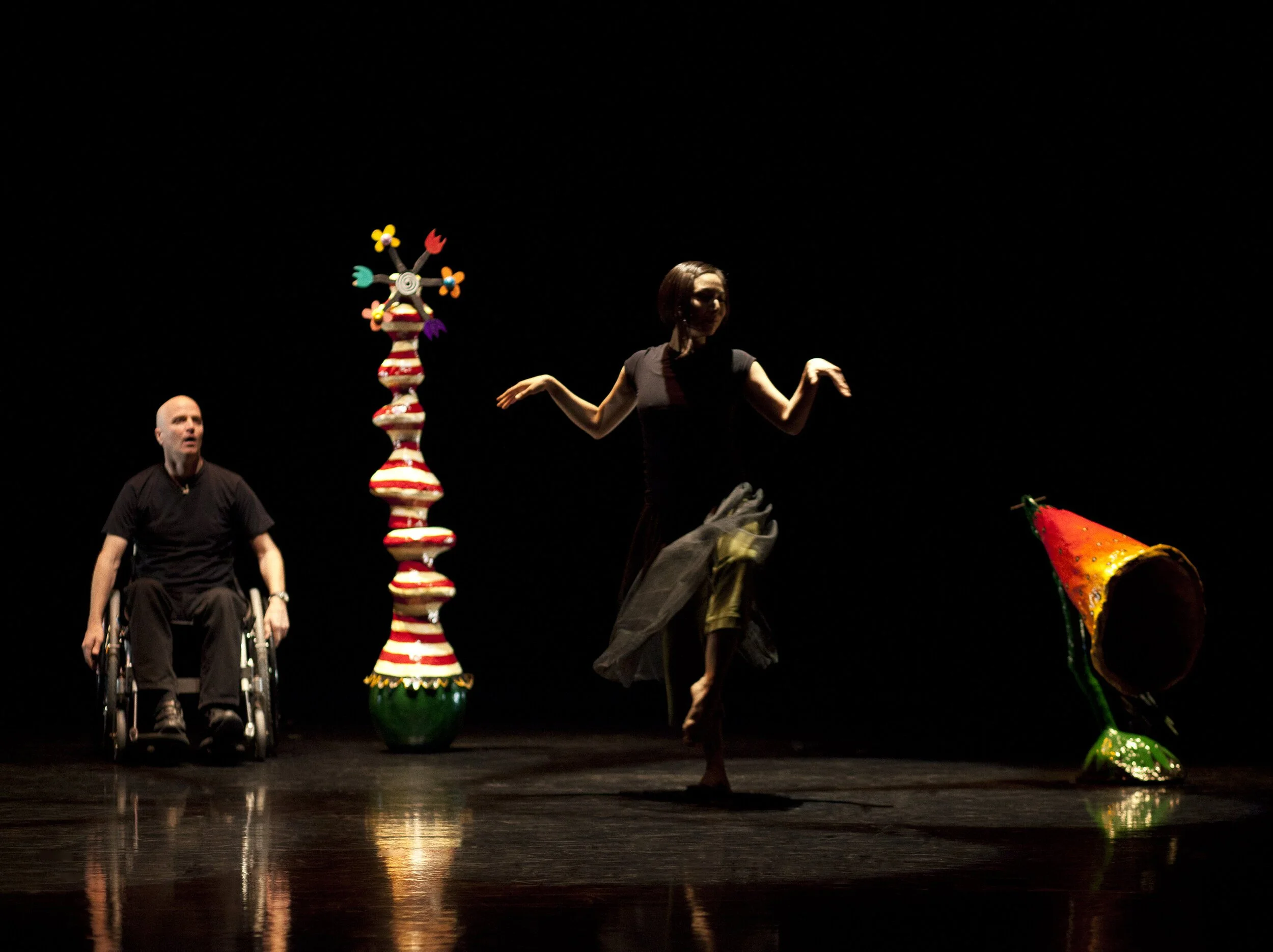
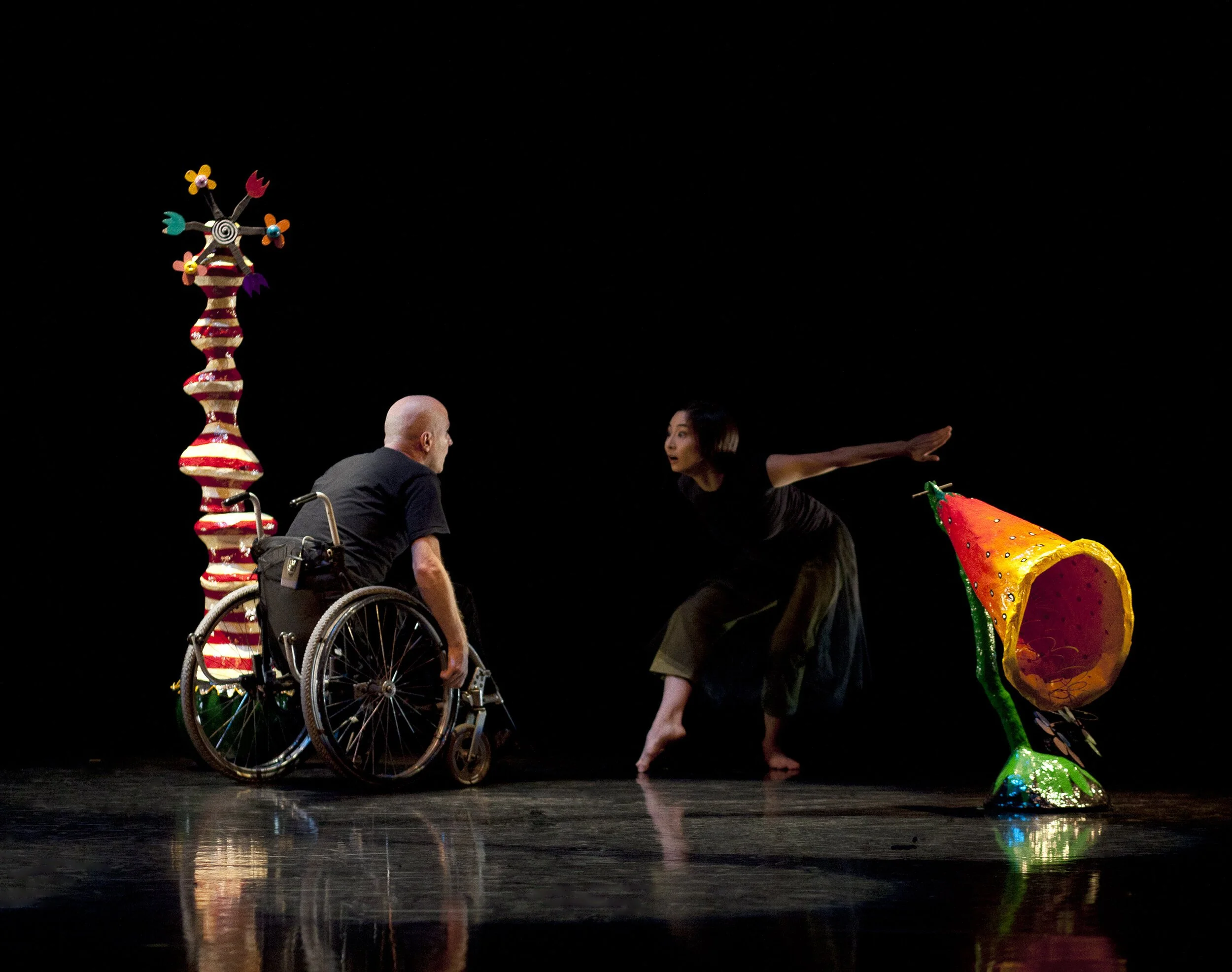
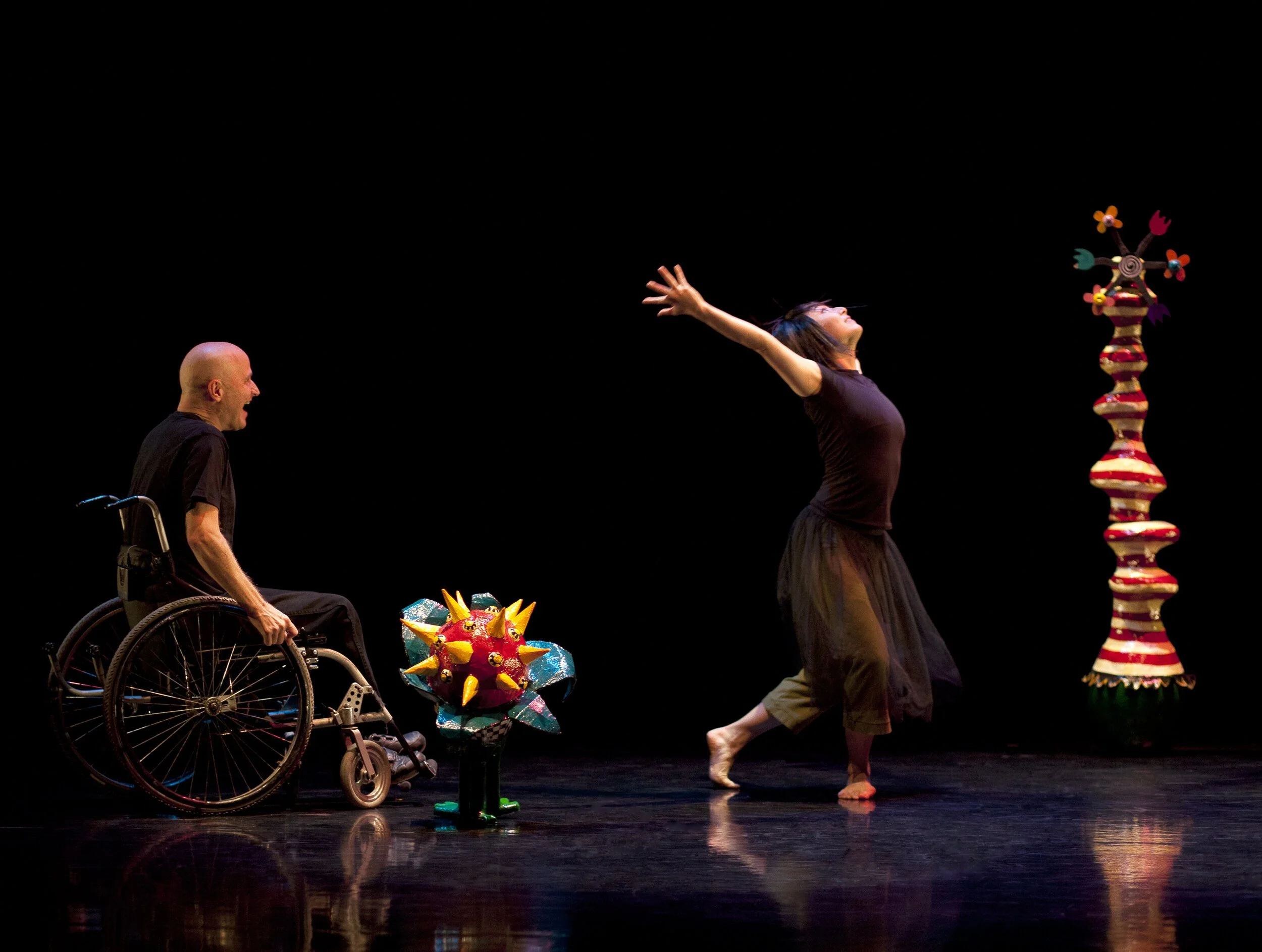
“For this second work together, Ahmed Hassan and I started by reversing the rules we’d established for Sanctum, in which we were set far apart, each confined to our own small rectangle of space, and for which Ahmed’s music was comprised purely of percussive sound. For this new work, we had sculptor Janet Morton create a set of three objects to define the circumference of a circle, and Ahmed and I discovered and pursued one another within this miniaturized world. We thought of ourselves as entities with distinctly different modes of expression and communication: Ahmed a creature for whom sound was primary, and me a creature of gesture and action. Wearing a wireless mic, Ahmed careened about the space in his manual wheelchair while I bounded and scampered away from him and toward him, finally meeting face to face, stepping inside the footrests of his chair, grasping him by the shoulders, and lowering myself to squat back on my heels while we met eyes and he “sang” to me.
An invitation to revive Geometry of the Circle for performances as part of the cultural celebrations for the 2010 Winter Paralympics in Vancouver led to a decade of rich collaboration with the vocalist Fides Krucker. First interpreting and reconstructing Ahmed’s extraordinarily eccentric vocal score, Fides then taught it to performer Mark Brose, coaching him in the intricacies of a virtuoso performance that he shared with two exquisite dancers: Alison Denham and Sahara Morimoto.
Geometry of the Circle is as dear to me as a love letter, inscribed with the disappearing ink of live performance.” PB
"Hassan...earthbound...confined to a wheelchair... (Baker) his velvet-jointed sylph...a celebration of mutual power, and of constructive differences." - Robert Everett-Green / Globe and Mail
Read about Janet Morton knitting a cozy for an entire house on Ward’s Island here on Torontosavvy.com. For a more academic analysis of Janet’s work, read Emily Jane Rothwell’s Master’s Thesis here.

Her Heart (1992-93)
This week Peggy looks back at a work that is very close to her, inspired by her mother, Rean Smith:
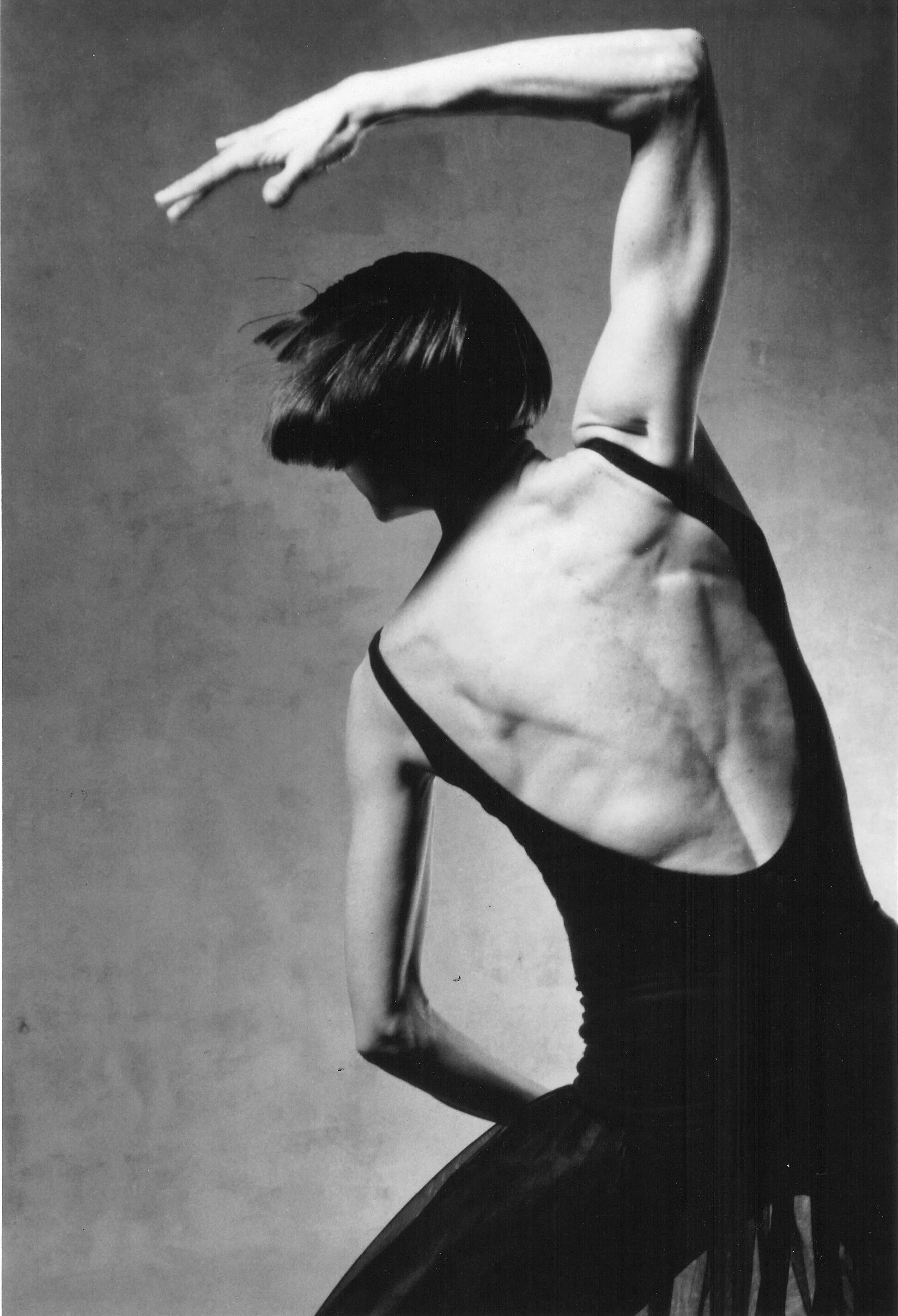
From 1991 to 1994 I was director of the summer dance program at Simon Fraser University on Burnaby Mountain, and I often stayed on in Vancouver to teach for EDAM at the Western Front. Peter Bingham had picked up the reins of EDAM as Artistic Director in 1989, (it had been a collective that included my husband Ahmed Hassan up to that point), and during those Vancouver teaching stints Ahmed and Peter and I spent a huge amount of time together – sharing meals, discussing art and politics, listening to music. One evening Peter put on a record of late piano music by Johannes Brahms and the Opus 117 and 118 Preludes immediately suffused me in waves of memory connected to my mother.
In 1992, I was invited to create a work for Joysanne Sidimus and Susan Macpherson for a gala in support of the Dancer Transtion Resource Centre, and I took this as an opportunity to work with Opus 117 No. 1. As I made this duet I held the image of my mother at her age at that time, 64. My mother was just 24 when I was born, and other of the preludes captured vivid memories of her in her thirties (Opus 118 No. 2), forties (Opus 117 No. 2) and fifties (Opus 117 No. 3). In 1993, I distilled the duet into a solo and brought it together with the other preludes in a work I titled Her Heart.
My mother died in 2018, a few months before her ninetieth birthday, and only a matter of weeks before a concert in Toronto for which the superb dancer Jessica Runge would perform Her Heart. The great Brahms interpreter Peter Longworth was to have performed with Jessica, but he went into the hospital just days before the opening and tragically died soon afterward at the age 53. With just three days to prepare, pianist Cheryl Duvall stepped forward to play the Brahms in a series of performances that held love and longing and a profound sense of loss. - PB
"A rhapsodic memory dance addressing themes of the aging woman." Elissa Barnard / Chronicle Herald / Halifax
For an introduction to the music of Brahms visit The Guardian here.


La vie de bohème (1993)
For her next self-devised solo, Peggy turned to an early collaborator from her days at Dancemakers, acclaimed Canadian composer Michael J. Baker:
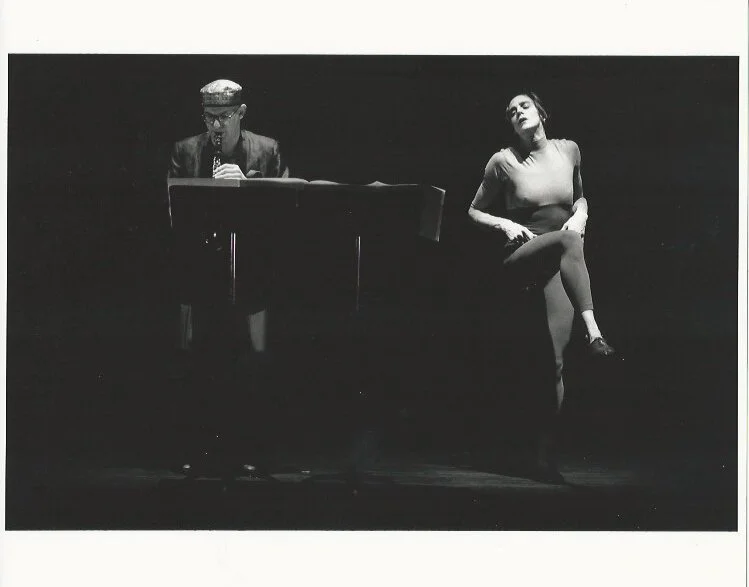
“Michael was always aware of the tremendous privilege of being able to devote himself entirely to music. He played trumpet as an orchestral musician and in the horn section for R&B groups, funk bands, and new music ensembles; he played guitar in Toronto coffee houses with his songwriting partner John Lent in the 1970s; he sang everything from early western choral music to back-up vocals and folk songs; played percussion for dance classes; doodled on piano, violin, and saxophone; he composed; he conducted; and he hand-copied parts for a host of composers in the days before computers. A favourite phrase of his that captured his surprise and joy at working full-time as an artist was “Ah! La vie de bohème!” So when we set out to make a work together for the first time in 15 years we took that phrase as a title and starting point.
Writing a two-part score for clarinet virtuoso Robert W. Stevenson (one part was recorded to tape, and the other played live), Michael also drew illustrations that followed the musical lines for me to use as a map for my dancing. The finished work included projections of details from Michael’s dance score as white line drawings on a black scrim. Bob’s playing felt to me like beat poetry and my dancing felt simply like listening, and digging it.” PB
"she's all angles...tight...funky" - Susan Walker, The Toronto Star
Listen to a range of original compositions by Michael J. Baker on YouTube and on michaeljbaker.org.
Hear Allen Ginsberg teach “Literary History of the Beats” in audio lectures recorded in 1977 & 1981 on Open Culture.
And here’s a list of work by female poets of the Beat Generation - yes, they exist! - from the New York Public Library.




Beautiful Day (1992)
The final work from 1992 is Beautiful Day, a duet by Mark Morris, created in part on members of his company, and in part on Peggy and her duet partner for this piece, Christopher House.
“It was with no small measure of regret that I left The White Oak Dance Project and the company’s repertoire of magnificent dances by Mark Morris. So once I was settled in Toronto I contacted Mark to ask if he might make a duet for Christopher House and me. I hadn’t yet had the chance to dance with Christopher, and I thought a duet by Mark would be a spectacular way of thanking him for The Windows, the solo he made for me in 1989. I also thought it would be a way of sharing some part of the incredible world that had opened up for me during my time in New York.
Mark had just begun a new duet with some of his company dancers – work he would have to interrupt to fulfill a commission for Les Grands Ballets Canadiens – and he suggested that Christopher and I work with him in Montreal, learning the first half of the duet from video of his dancers and then finishing the work with us to take back to his company. The time together was absolutely magical, and the duet a jewel!” PB
“I was working on Beautiful Day with three couples from my company, the Mark Morris Dance Group, at the same time as I was working in Montreal with Les Grands. Peggy, Christopher House, Teri Weksler (as my assistant) and I worked together to finish the piece. It was premiered by my dancers (originally Clarice Marshall and Keith Sabado) at the Manhattan Center Grand Ballroom in 1992. The dance gets its title, and is set to, the aria “Schlage doch, gewünste stunde” from a rarely performed cantata (attributed to J.S. Bach, but unlikely) for alto voice, strings, and handbells. It is built on a study in combining angular momentum with spiral force, whatever that means. I must say, it was an enormous pleasure to work with Peggy and Christopher, both fabulous dancers, Canadian National Living Treasures, and my friends. And it’s a beautiful dance.” MM
Listen to a 1992 CBC radio interview with Peggy and host Vicki Gabereau here.
Read more about Melchior Hoffman, the more likely composer of the music than J. S. Bach here on Wikipedia
Read about the history of the Manhattan Center Grand Ballroom in The New Yorker here.