

unmoored (2018)
This week we hit the final solo that Peggy commissioned for- and performed- herself. A sequel to a work she premiered 14 years previously. Peggy writes:
In 2003 I turned to the extraordinary dance artist Sarah Chase to make a work for me. Sarah creates in a genre she describes as dancestories, and prior to working together she set me the task of writing two stories for every year of my life. When the time came to go into the studio together, I told Sarah that there was one aspect of my life that I hadn’t written about and could not share in the public sphere. Sarah agreed to my caveat, and we went on to create a very beautiful work titled The Disappearance of Right and Left. More than a decade later I went back to Sarah to let her know that I was now ready to think back on the events that I had previously held apart and to mindfully look to those events as the basis for the creation of a new dancestory.
In March of 2017, I sat down at a desk, in a small room, in the Bogliasco Foundation villa, where I was undertaking a 5-week fellowship in Italy. Guided by Jane Hirschfield’s extraordinary book Nine Gates: Entering the Mind of Poetry , I wrote down the stories I had not been previously ready to share. At the end of my residency I arranged the stories in a rough performance draft – incorporating some initial movement devised by Sarah – and shared the in-progress work that included a poem by Rumi as the final scene, with the other Bogliasco Foundation fellows.
In the months that followed, Sarah and I worked together to develop a choreographic staging to frame and hold a distillation of my writing as a dancestory titled unmoored. The episodes that I recount in unmoored describe events during the 20-year arc of my marriage to the musician, composer, and disability rights activist, Ahmed Hassan. The complex and emotionally charged themes of disability, caregiving, and death at the heart of this work are handled by Sarah with tremendous sensitivity.
One of the poems included in Hirschfield’s book struck an especially deep chord with me. This poem by the 13th century Japanese Zen master Eihei Dogen captures something essential about the utter emptiness of loss, and of how that empty space can in fact offer an opening for illumination:
unmoored
in midnight water
no waves, no wind
the empty boat
is flooded with moonlight
In addition to the Bogliasco Foundation in Liguria, Italy, unmoored was created with the invaluable support of residencies at Tiamat House on Hornby Island B.C., (through the generosity of Judith Lawrence); and Ottawa Dance Directive, Artistic Director Yvonne Coutts / Associate Director Lana Morton.
unmoored premiered at The Theatre Centre in Toronto, with subsequent presentations at The Citadel (Toronto), EDAM (Vancouver), ArtSpring (Salt Spring Island B.C.) Crimson Coast Dance (Nanaimo), and Ottawa Dance Directive.
Winner - Dora Mavor Moore Award for Outstanding Performance in a Dance Production: Peggy Baker
“The work is one of total perfection as the heartbreaking text and Baker’s eloquent movement swing back and forth between darkness and light. “ Paula Citron
“Chase has shaped a performance that Baker speaks, sometimes reading, sometimes reciting, raw in its emotion and polished in its performance. As an artist, Baker needed to make this dance story, for it marks the renewal of creativity, going forward with undying love on the wings of Rumi.” Susan Walker
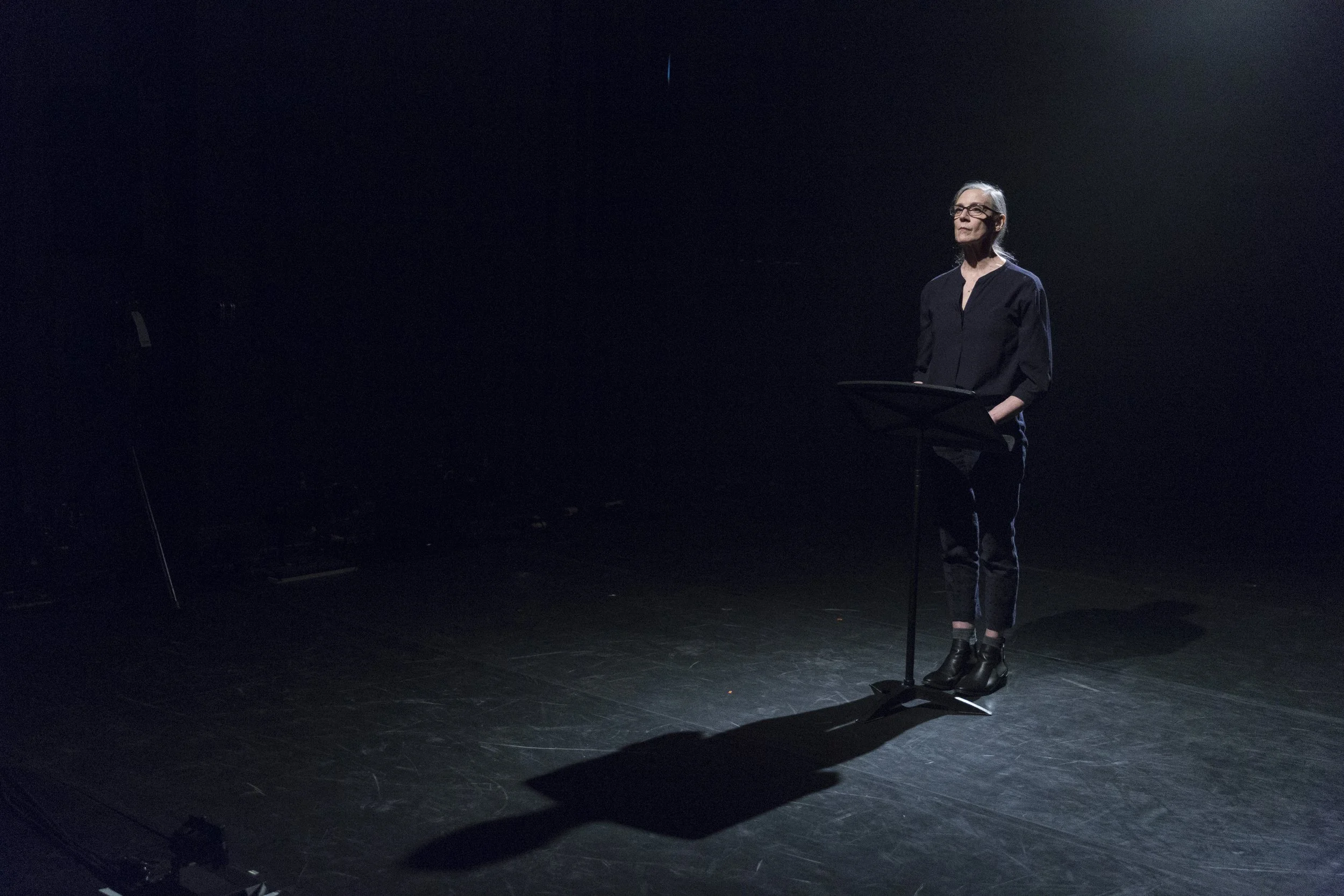
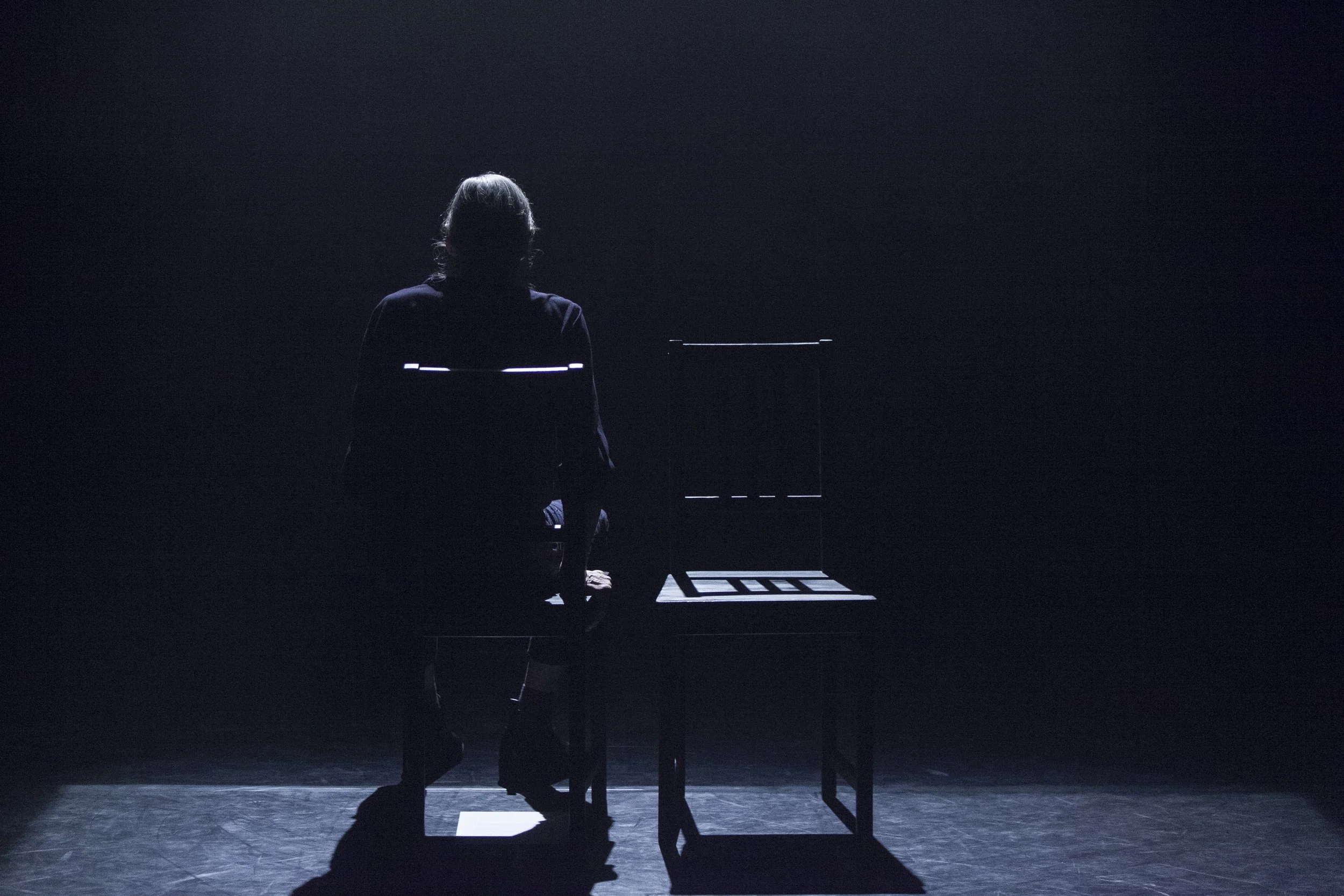
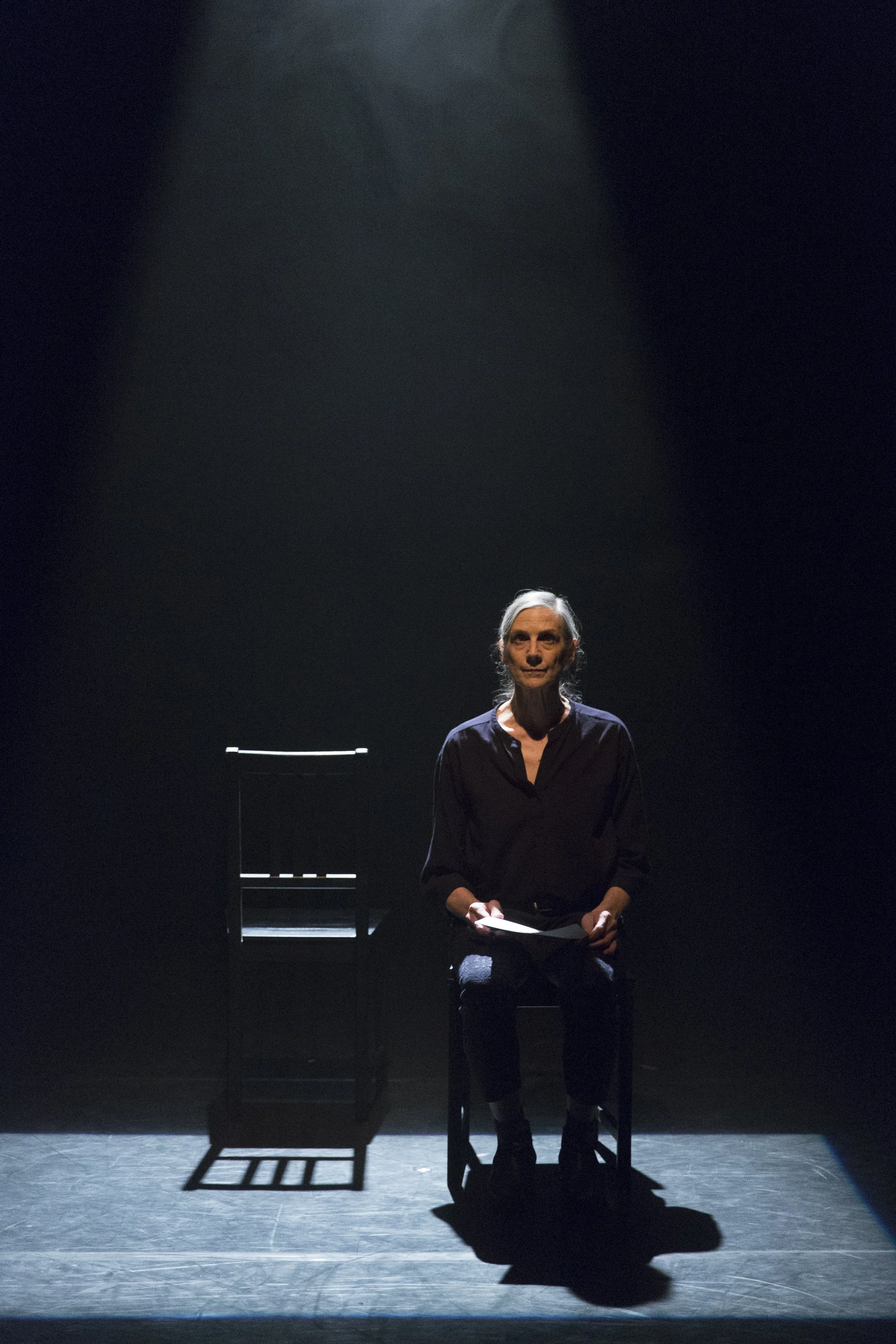
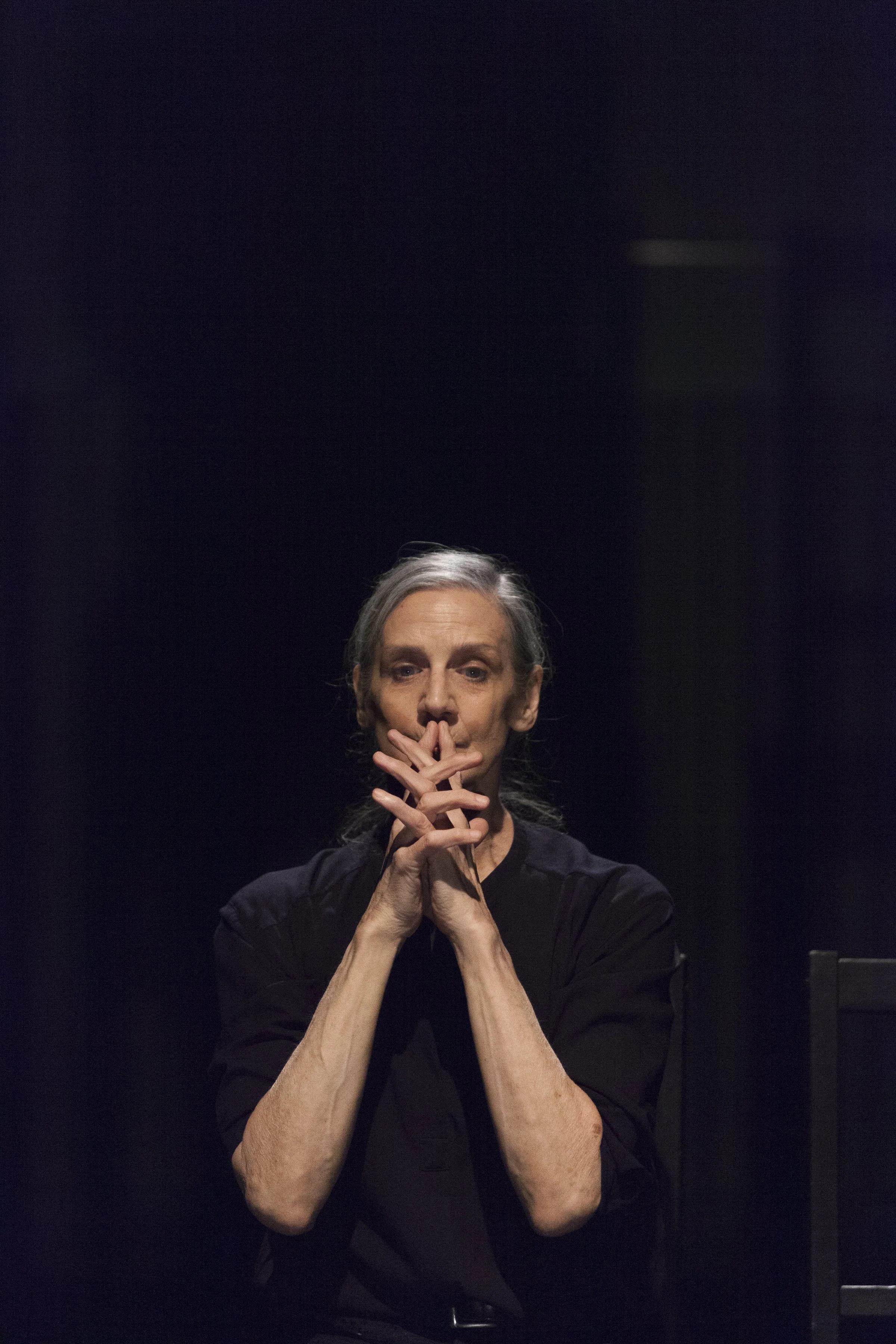
All photos below of Peggy Baker by Aleksandar Antonijevic.

Dreaming Awake (2008)
In this week’s post, we look back at the third collaborative project with NY-based dancer and choreographer, Molissa Fenley.
Peggy writes: I was extremely excited to be working with Molissa Fenley again when we set out on the development of Dreaming Awake with a premiere expected early in 2007. I had always taken a huge amount of pleasure in the circuitous choreographic pathways of her dances and the ways in which she connects with musical landmarks, with the dancer navigating the architecture of the sound rather than the phrasing of beats. Dance adrift on an ocean of music.
For Dreaming Awake Molissa had chosen a piano work of the same name by Phillip Glass and used the music – which cycles in repeating loops – twice in a row. It was an interesting coincidence because I had chosen to do the very same thing the previous year with Karen Tanaka’s score for Krishna’s Mouth and I fully appreciated Mo’s desire to double it up.
Choreographically, Molissa set out a series of complicated phrases in what proved to be a first iteration, because before long the phrases were fragmented and rearranged many times over, sometimes doubling back to places on the stage and within the choreographic language that were maddeningly familiar. It felt something like being inside of an architectural construct by Escher and it was quite disorienting. In an early studio showing I became hopelessly lost when I discovered myself at the same intersection in the dance several times in a row, an experience I found completely unnerving.
While I was rehearsing Dreaming Awake I developed chronic pain in the third metatarsal of my right foot. It eventually proved to be a stress fracture, and I learned that it wasn’t going to get better unless I could stop altogether for many weeks. On the other hand, it had been hurting me for months without interfering with what I needed to accomplish, so I decided to go ahead with my planned 5-city tour (titled “3”) thinking that once it was finished I would take time off. Then, just days before leaving for Montreal, doing a simple transfer of weight to my right foot – (you’ve probably seen this coming) – I felt the bone snap and there was no longer any question about when I would stop so that the healing could begin.
Embarking on tour a year later, my foot was up to the physical challenge, but the complexities of finding my way through the labyrinth of steps in this gorgeous dance continued to threaten me with catastrophe. I finally premiered Dreaming Awake in Calgary, but that foot injury marked the beginning of slow shift in my thinking and eventually in my dance practice, one that led me to the role of choreographer of ensemble works.


The Disappearance of Right and Left (2004)
This week’s work is a truly landmark piece in Peggy’s repertoire. A dancestory created with Sarah Chase, The Disappearance of Right and Left artfully shares stories from Peggy’s family history in a deeply compelling work that speaks to audiences across genres and generations.
Peggy writes: Sarah Chase is a superb artist whose body of work stands as an utterly unique and hugely valuable contribution to the art form. Sarah frames memoir within choreographic structures, combining text and movement in ways that allow the inner life and personal history of the performer to be drawn into alignment with the life experience and empathetic capacities of the audience witnessing the work.
I’m thinking that my own dance with spoken text (a true story, 1997) was made the same year that Sarah created her first dancestory, Muzz. Sarah’s dance was much longer and more complex structurally, but the biggest difference was that Sarah spoke in the first person – unabashedly using the identifier “I” – whereas I spoke in the third person, veiling my relationship to the events I described through the use of the descriptor “the woman”. A studio showing of Muzz by Sarah at Damn Straight on Spadina Avenue in Toronto remains an indelible memory and the power of the work, and of her performance, was absolutely the inspiration for approaching her with the idea of commissioning a work in this style for me.
Six months prior to going into the studio, Sarah assigned me the task of writing two stories representing each year of my life. 51 years old at the time, I needed to excavate 102 stories from my life. Conversations with my parents about my childhood also brought forward stories from their own lives and in the end, Sarah included stories that spanned five generations in my family.
The Disappearance of Right and Left emerged as a work of 45 minutes that was both terrifying and cathartic to perform. It revealed deep connections of experience and learning across the history of my family and allowed me to come to terms with some of the most dismantling turning points in my own life.
Sarah possesses the extraordinary ability to compose and direct performance works centered on personal history without ever veering into the trite or sentimental. Dancestories made for herself, for Marc Boivin, Andrea Nann, and a second work made for me in 2018, (unmoored), comprise a truly remarkable collection of works. PB
Sarah adds this: Peggy was a pivotal teacher, mentor and guide in my life, and I was thrilled and awed to be creating with her in 2004.
I loved how Peggy spoke when she taught, the vivid way she had with language, the colour of joy in her voice, and her inimitable gestures. I knew I wanted to make a work that would allow Peggy to speak stories from her life, to share her rich inner world, and to magnify her extraordinary gestures into a danced language. I wanted to understand her biography and how it had shaped the artist I loved, and if possible to reveal this to an audience.
These 102 stories/memories she assembled sparked deep conversation between us. I remember feeling overwhelmed by the many possible performance directions the material could take. (The first rehearsal we shared for a small audience was over an hour and a half long!) We ended up focussing on 12 stories that were moments when she or a member of her family, experienced a deep shift in perception, which we captured in the title.
To me, Peggy’s dancing contained the big dome of the high prairie skies around Edmonton where she grew up; the open geography of her childhood called forth in her long expressive arms and hands. So part of the beginning of the rehearsal process was creating a dance based on images and experience of being in that landscape. I wanted this to be the ground for the emotional stories that she would be sharing during the piece.
Peggy and I poured over photographs that represented the 12 essential stories we finally chose. In the first performed versions there was a large backdrop that had these double-sided images on it. They swivelled to reveal a full prairie landscape that was on the reverse of the 12 individual story images. I realised, eventually, that the backdrop was actually limiting the performances. Peggy’s gestures were conjuring so deeply the worlds of the stories, that having a literal photographic illustration behind her was an unnecessary distraction. We stopped using the backdrop.
This process was an incredible journey into Peggy’s inner life. It deeply changed the way I thought about creating, and continues to inform my work to this day. SC
“Disappearance is autobiographical…Chase makes full use of Baker’s wonderfully eloquent arms that carve the air in generous sweeping motions or settle momentarily into a detailed sculptural pose.” Michael Crabb , The National Post
The Disappearance of Right and Left is one of the few works in Peggy’s repertoire danced to music with lyrics. For a deep dive on Joni Mitchell’s classic song Amelia, selected by Peggy to feature in this show, visit jonimitchell.com


Unfold (2000)
In 2000, the decade-long collaboration between Peggy Baker and Andrew Burashko sees them tackle a major new work suggested by Andrew: Aleksandr Scriabin’s 24 Preludes, Op. 11. Peggy writes:
“Andrew had been proposing this work for some time, and the gift of commissioning funds from Symphony Space in New York and the National Arts Centre in Ottawa – with performance dates that fell just a month apart – provided the perfect opportunity for us to dedicate ourselves to the development of this demanding work.
Like Chopin’s 24 Preludes, Op. 28, (which served as his model), Scriabin composed a short work in each of the major and minor keys of classical western music, and despite this academic premise, his 24 pieces are charged with deep emotion. Some sound as though they are at a loss to complete themselves, while others give the impression that they are about to float apart, combust, collapse inward, or dissolve. A couple of them are as conclusive as a slammed door at the end of a heated argument. Taken as a group they propose what I can only describe as a self-portrait of the composer, and any pianist taking them on must transcend their highly personal specificity and bring a singular interpretation to the score.
I wanted to step up to the score on these same terms, discovering within the style and scope of the music a framework within which to reveal myself with immediacy and authenticity. Ultimately, Unfold offered the audience an intimate experience of Andrew and I as individual artists and as artistic collaborators, but also simply as very different people who have built a deep friendship by bringing our worlds together.
Unfold falls half-way through the 20-year arc of my shared performance life with pianist Andrew Burashko and looking back I see that this was the last of my choreographic works to be created with him; the new dances that followed for he and I were the work of others – Doug Varone, James Kudelka, and Molissa Fenley.” PB
“Baker’s angular, constructivist choreography seems a part of the music, another instrument playing the melancholy themes. Sometimes she dances in silence… Sometimes Burashko plays alone. In those passages the ghost of the music and the after-images of Baker’s movement are ever-present.” - Susan Walker, The Toronto Star
If you’re looking for any information on Aleksandr Scriabin, the Scriabin Association has you covered and then some.


loin, très loin (2000)
We’ve reached the next - and largest - collaboration between Paul-André Fortier and Peggy Baker, an epic full-evening solo entitled loin, très loin which translates to far, very far. And that’s exactly where Paul-André took both Peggy and the audience for this work, to a place none of us had previously known existed…
“For several months at a time, during 1998 and 1999, I had the huge privilege and grand adventure of being included in quartet project with Fortier Danse Création in Montreal, La part des anges. The title, (which translates as “the angels’ share”), is a French idiom that refers to the small portion of alcohol lost through the wooden walls of barrels used for fermentation. Perhaps this title was a reference not only to what might be lost in translation, but also to what essence might be captured by bringing together four dancers whose foundation in the dance was dramatically different in each case. In his program note for this work, Paul-André describes me as coming from the world of modern dance; Gioconda Barbuto as being a classical dancer; and Robert Meilleur as a proponent of contemporary dance. I certainly took my own portion during this exceedingly rich and deep experience, and it has continued to work on me over the intervening decades.
Paul-André entered into creation by having each of us learn a recent solo of his, Novembre, and once we all landed with him through this dance he set out through far ranging choreographic experimentation to allow the quartet to arise. His point of view on this was that the dance was waiting in our bodies and in the space and that it would reveal itself through the tasks, proposals, and provocations he set forward. We worked in silence and through a broad range of “atmospheres “ in the studio. Some days were charged with the rigour of copying or improvising, some rode on exuberant joy and hilarity, others were austere and saturated with the weight of significant gestures and choreographic interactions. We worked as a quartet, as re-coupling couples, as soloists. For scenes in which all of us did not dance, the others stood in an upstage centre antechamber as witnesses.
It was thrilling to be on stage with great dance artists in this superb work in Vancouver, Edmonton, Toronto, and Montreal. A year later, Paul-André brought us back together, (with the stellar Lisa Kovacs rather than Gioconda, who was now a dancer with NDT3) and we remounted the dance during a 3-week residency in Angers, France followed by performances in Bordeaux. One night, returning to the hotel from the theatre, Paul-André and I improvised together as we crossed a bridge, and it suddenly hit me very hard how much I was going to miss being a part of his work and world. The next day I gathered up my courage and asked Paul-André if he would consider allowing me to perform a program made up of his short works – Non Coupable, Novembre (which had struck a deep chord in me), my duet from La parts des anges with Robert Meilleur, plus something new for me. When Paul-André’s eyes widened and he said quite simply “Non”, I felt the terrible thud of refusal, and the humiliation of having stupidly trespassed beyond the scope of our relationship. And then he immediately said, “I prefer to make you a full-evening solo”. Within a year, he had done just that.
I wrote a program note for this dance that has become more fully realized with each passing year:
I have become a very different dancer, even in some way a reinvented woman, by virtue of being set in motion by Paul-André Fortier. It is as if his dance asks, “What if this had been the case? Would you not now have become someone else?” So embodying a rewritten history, I navigate a new fate.” PB
Paul André adds: “This piece was created extremely quickly. In fact Peggy struggled to remember all the material I was creating, so swiftly did the ideas come tumbling out. The choreography, costuming, lighting and the music all worked in tandem, feeding Peggy’s interpretation. It was the most demanding solo Peggy had ever performed. The multitude of performances at Montreal’s Agora de la danse seemed as daunting as climbing Mount Everest. And what a magnificent ascent!”
“It would be impossible to overstate the gravitas of this work… The revolutionary ethos of Fortier’s own early years…are summoned forth here by the acid guitar solos of Gaetan Lebœuf’s original score.” Michael Scott / The Vancouver Sun
Watch a short film made about Paul-André Fortier, released by the National Film Board here on the occasion of the 2012 Governor-General’s Award for Lifetime Achievement in the Arts.
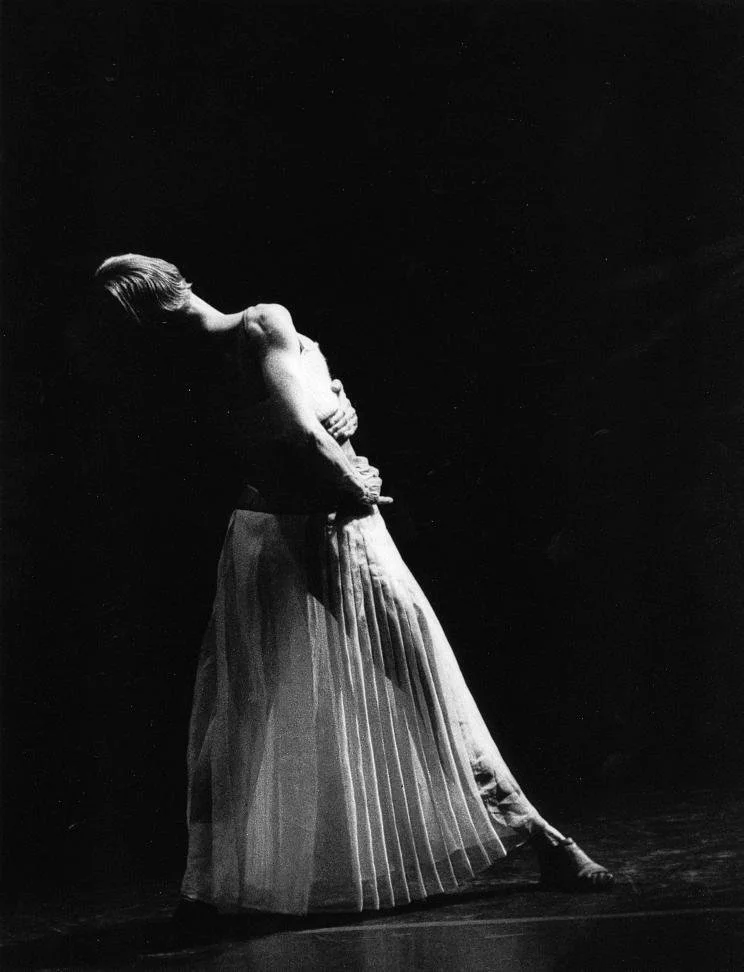
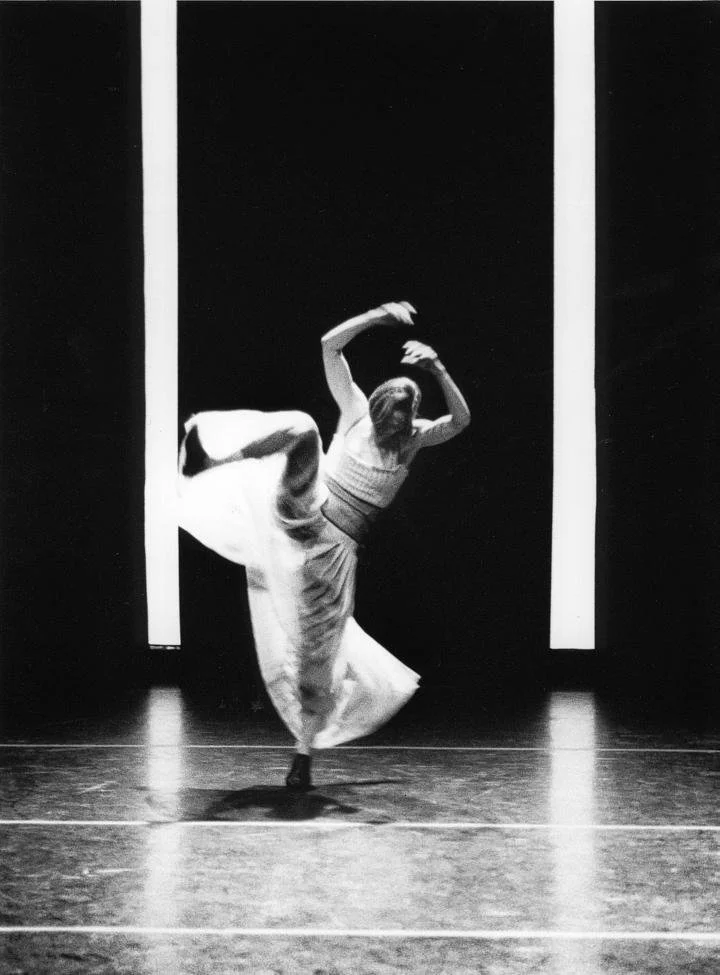
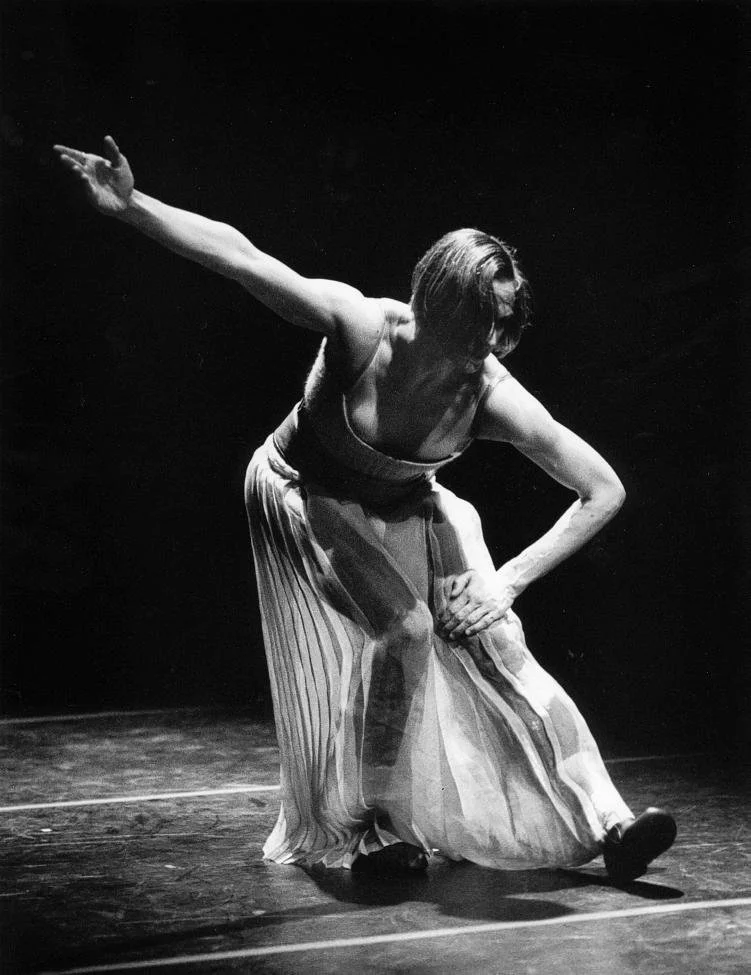
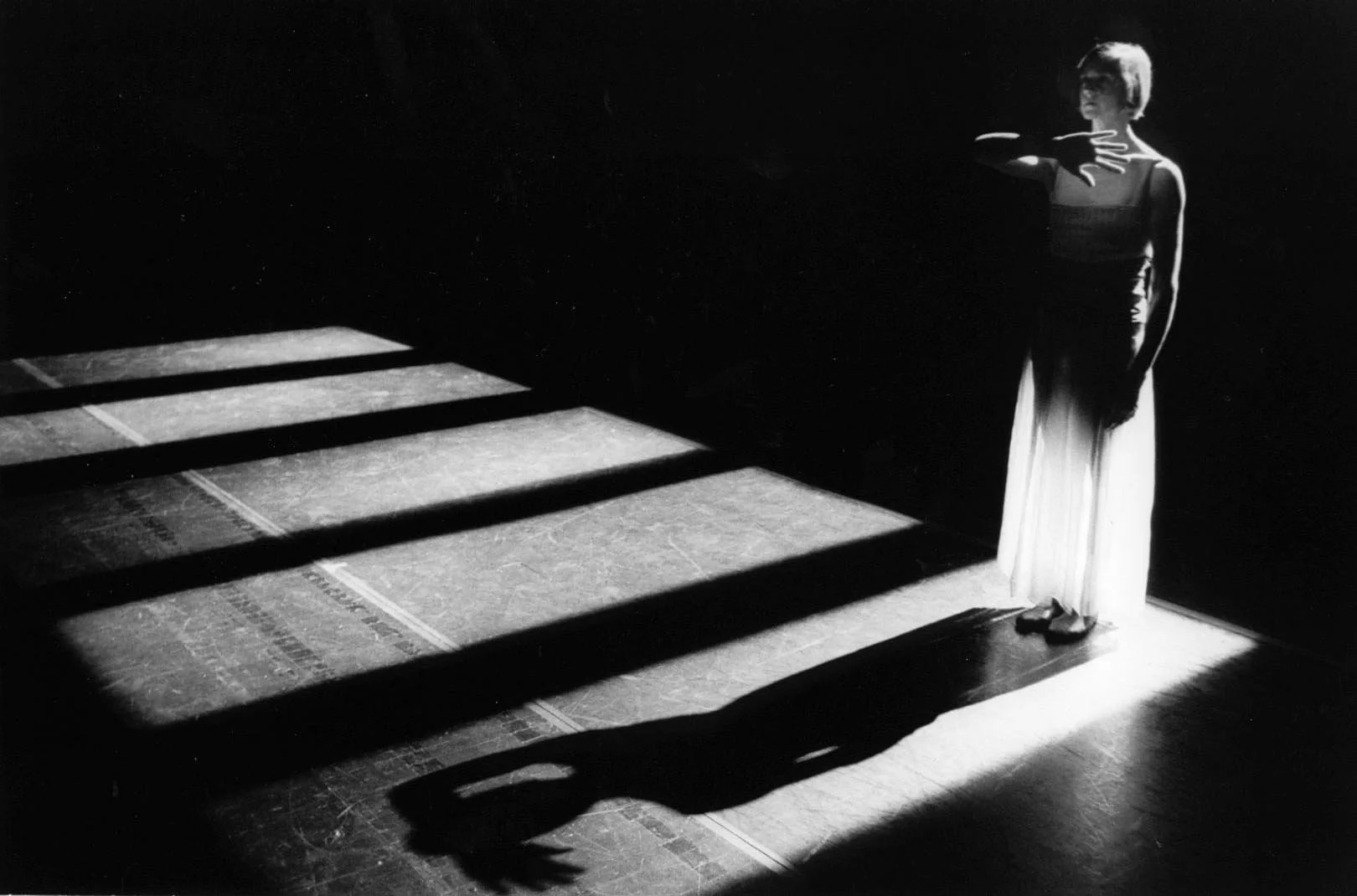
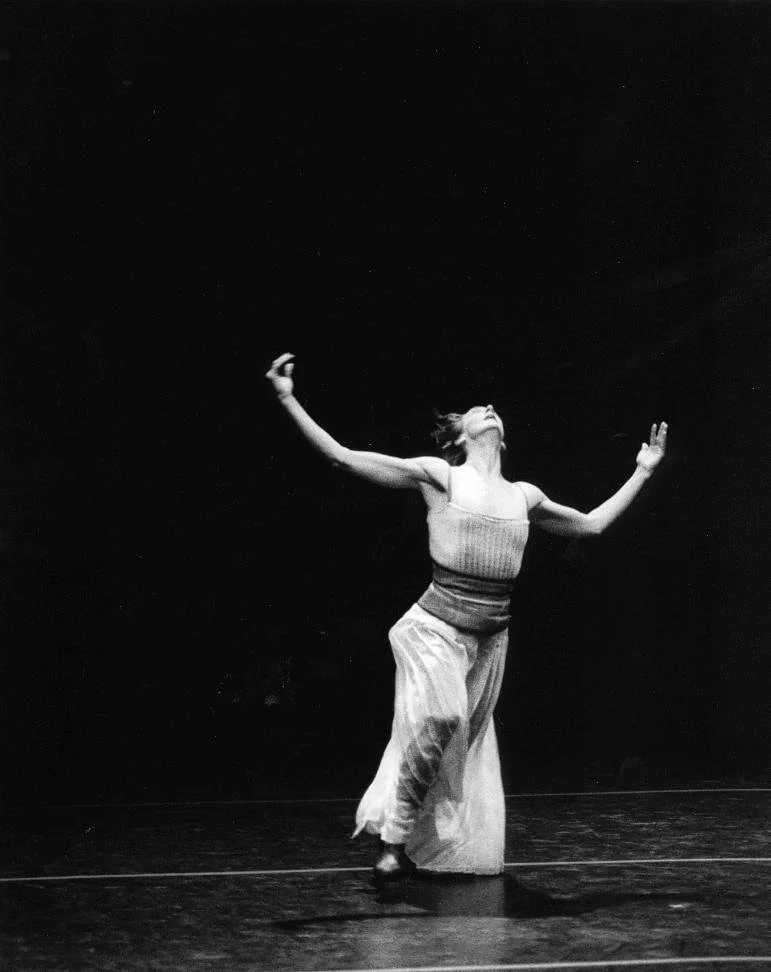
One of the most daunting challenges I have encountered in my dance life was an hour-long solo, loin, trés loin, created for me by Paul-André Fortier. It went absolutely against the grain of my technique and physicality. I couldn’t tell without the feedback of the rehearsal director, Ginelle Chagnon, whether I was inside or outside the aesthetic. The dancing was grueling to the point that I could barely get through it, and it left me thoroughly battered and spent. This was a solo made expressly for me, and I was terrified that I would humiliate myself as a performer and fail Paul-André as a creator. But some extraordinary things can happen when we are thrown beyond the outer reaches of our comfort zone and we are required to embody a physicality far removed from the self-image we like to affirm. Our strengths and weaknesses are laid bare; we are forced to deal with things we’d rather avoid; we see, and are seen, through a new lens; everything is at stake, so now there is something of real interest and importance to share. My program note for loin, trés loin was a thank you note to the choreographer for helping me to move beyond myself and toward something higher:
I have become a very different dancer, even in some way a reinvented woman, by virtue of being set in motion by Paul-André Fortier. It is as if his dance asks, “What if this had been the case? Would you not now have become someone else?” So embodying a rewritten history, I navigate a new fate.
As dancers, we are shaped by the works we perform, and that impact goes beyond our professional lives, directly to the personal sphere. As choreographers, we express ourselves on a kinesthetic and aesthetic level, but that expression is a direct translation of our imaginative, experiential, and intellectual lives, our basic humanity.

Cirrus (1997/2000)
A faculty member of The Juilliard School since 1995, Irene Dowd has been a foundational presence in Peggy Baker’s dance life, providing neuromuscular training and creating Cirrus on and for Peggy in 1997. Peggy explains:
“It’s beautiful to think back to this brief and exquisite dance, choreographed by my dear friend and cherished mentor Irene Dowd. Beginning in 1985 – and continuing over the next two decades – Irene guided me in discovering the inner landscape of my body, in all its mystery and magnificence, through an evolving movement practice grounded in functional anatomy.
In 1997 we shifted our focus to a dance choreographed for me by Irene. In a recent exchange of memories around our process, Irene remembers being under the sway of two important paintings by her late husband, Charles Stokes – the dazzling and rhapsodic Perpetua (which he was just completing) and the labyrinthine Inner Temple (which was newly underway).
Irene titled the dance Cirrus, as she felt the definition – “a tendril, a long thread-like organ by which a plant climbs; a light fleecy cloud at a high elevation” – sounded as though it was describing the movement. We had created in silence, but once the work was completed, I suggested dancing it with a John Cage work titled Dream. I didn’t have a chance to perform Cirrus until 2000, when it premiered as part of an evening titled Interior View. Irene allowed me to finish her dance by reaching my hand to the piano on the last note. No photographs of this dance exist, so it remains a treasured memory.” PB
To see an example of Irene’s approach to teaching functional anatomy through choreography, visit her website here.
To learn more about artist Charles Stokes, visit SeattleArtResource here.

Photo of Irene Dowd by Matthew Karas.

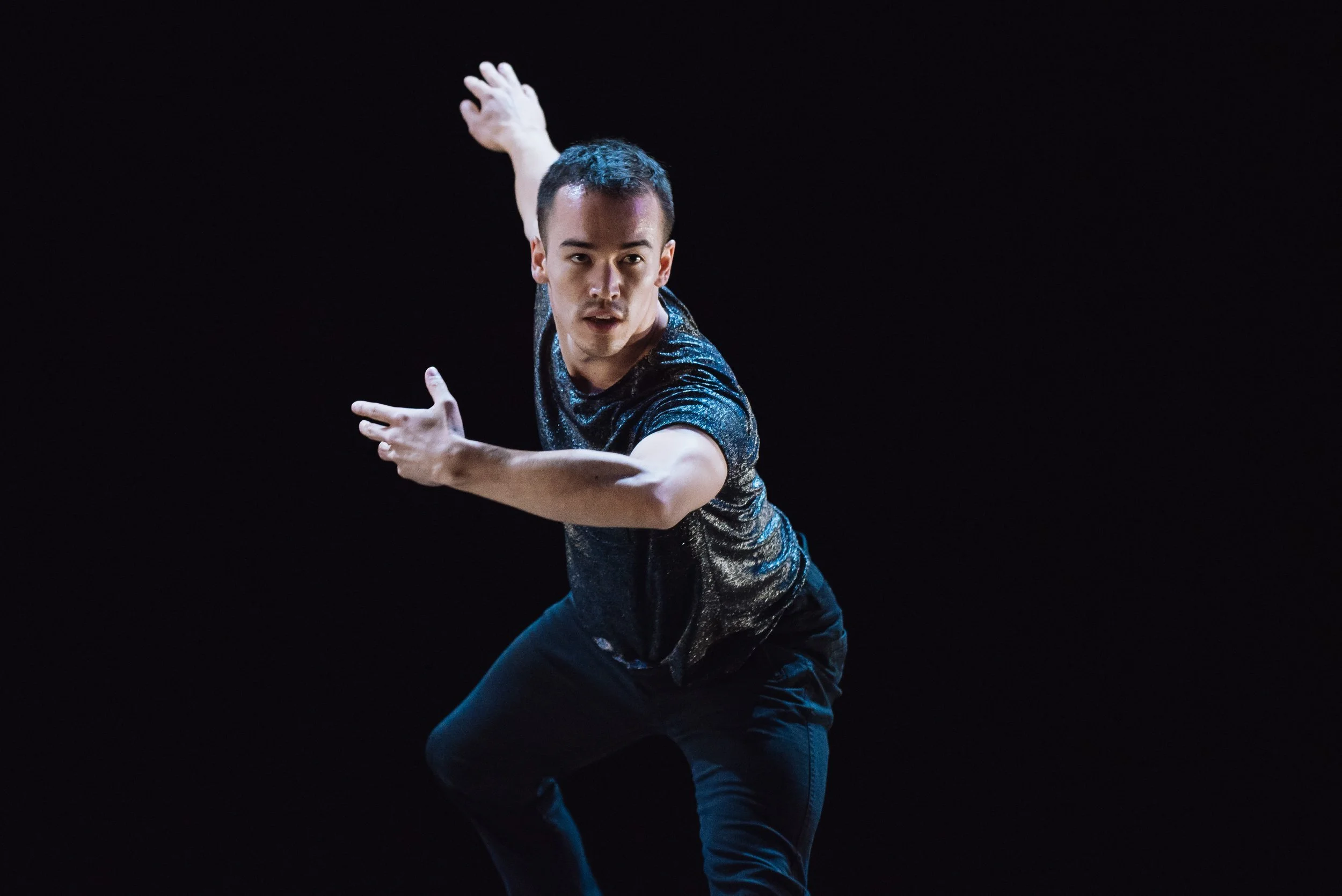
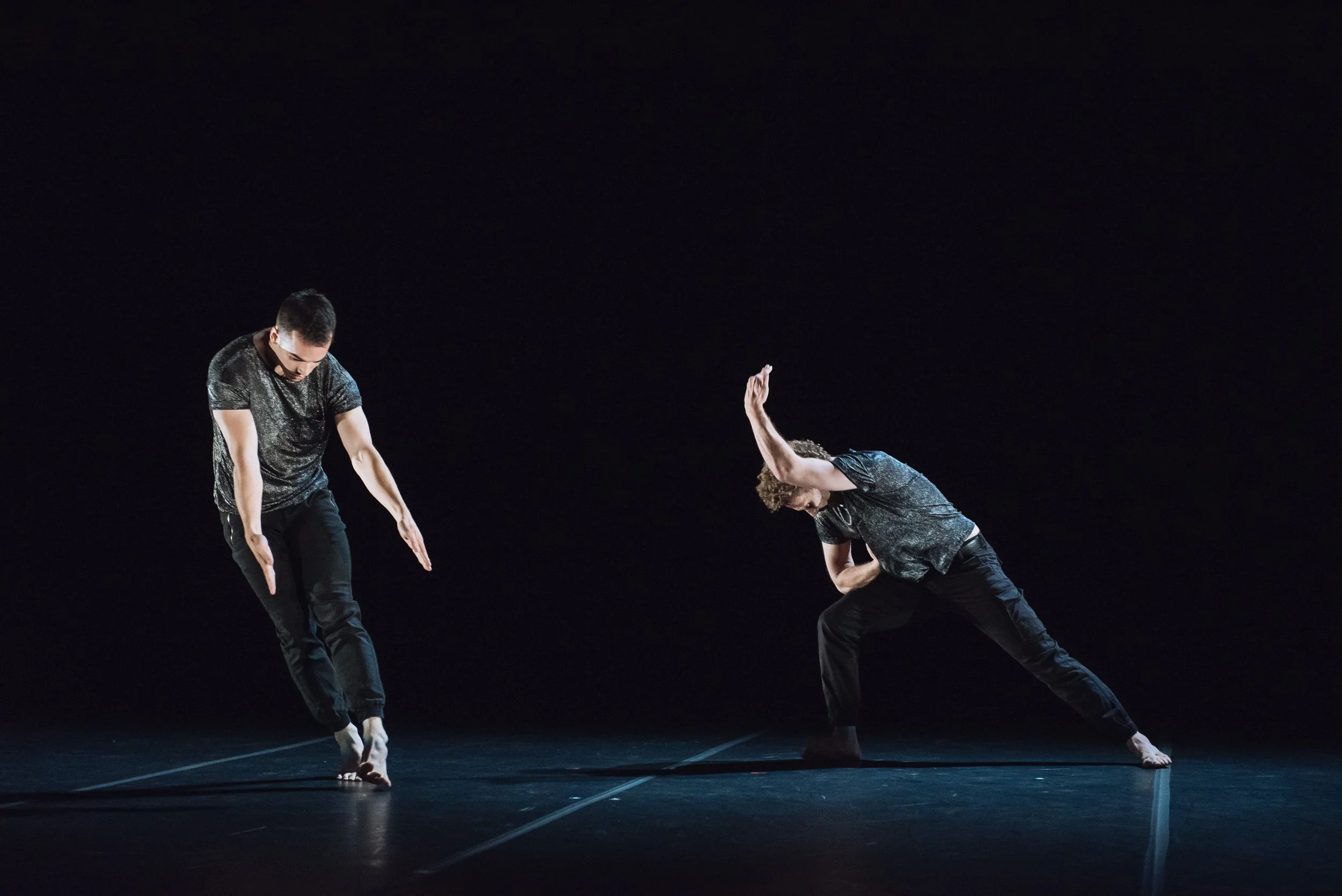
Yang (1998/2003)
Peggy is occasionally commissioned by other artists to make works for them - including Sarah Chase (Garland, 1996), Dancemakers (for Carolyn Woods, Rocket Girl, 1999), and Nova Bhattacharya (Map of the Known World, 2000). The only commissioned work from Peggy to be bought into the Peggy Baker Dance Projects’ repertoire is Yang, made for Sylvain Brochu in 1998. Sylvain writes:
“In 1997 I was awarded a Canada Council grant to commission solos from 5 selected Canadian choreographers. I had studied with Peggy, seen her perform, and was very inspired by her commitment and artistic integrity. Even though I had never been through a creative process with her I had a strong feeling that our connection would produce a powerful piece. Peggy knew me as a dancer and set up to create a dance that would greatly challenge me technically. I distinctly remember the main creation period: I had flown to Toronto for two weeks. The process was very demanding physically, but I applied myself wholeheartedly, and with a level of trust that I had not often experienced before. Yang turned out to be one of the strongest pieces of my solo repertoire, and was the ideal finale for my solo concert. I’m grateful for the gift of this dance, which lives on through successive generations of dancers.”
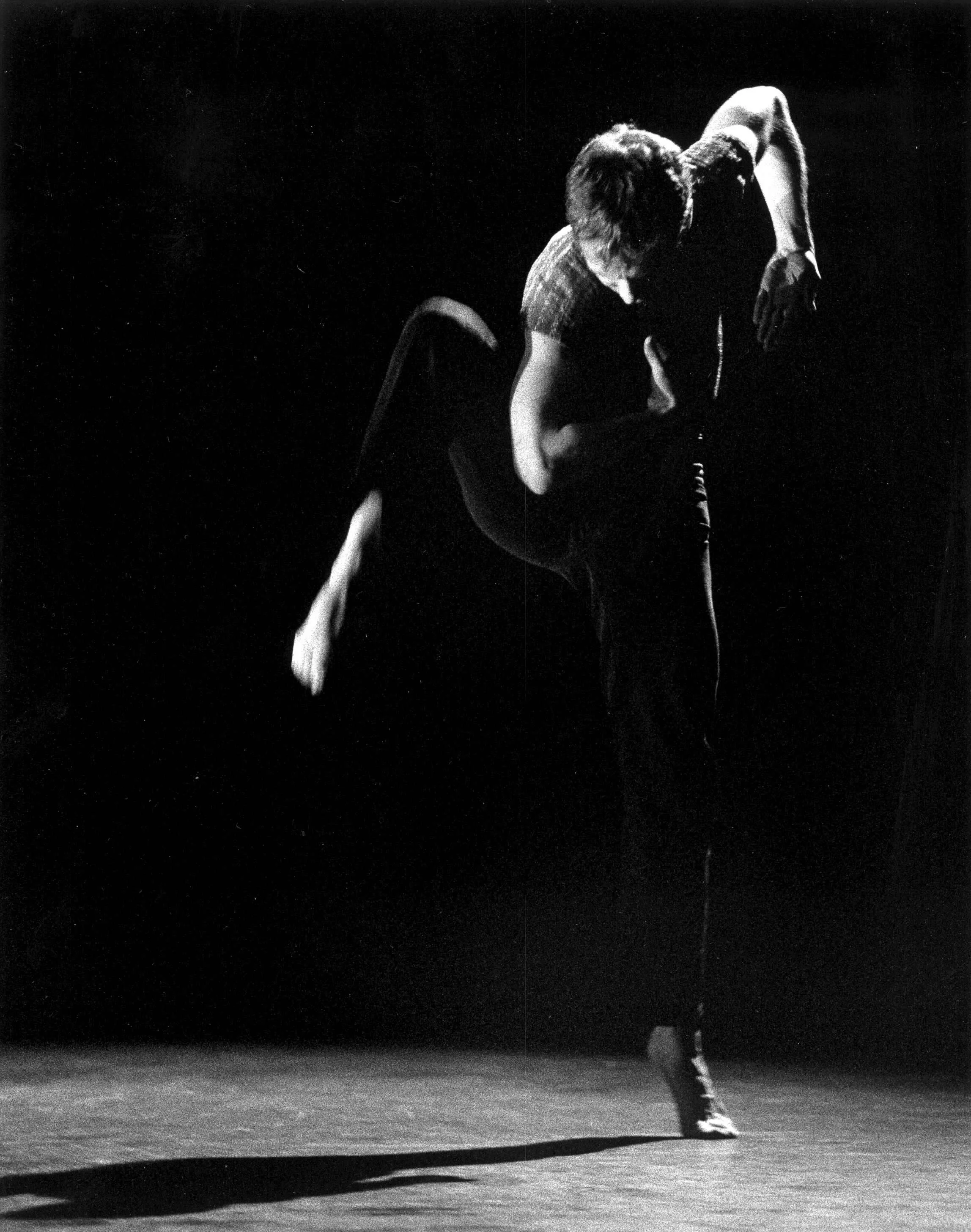
Peggy adds: “Like Sylvain, I still remember the intensity of the creative process for this dance. I went in from day one with the intention of developing an action language that would provide us with a challenging and exciting encounter, as Sylvain and I are dancers with extremely different movement sensibilities. That encounter was quickly informed by the androgyny we each embody. The forceful, strident movement vocabulary we were working with shifted me more into androgyny, and took Sylvain – a dancer whose movement signature is cushy and lush – further away from androgyny. In order to clarify our intentions, we focused on the qualities associated with the Taoist principle of yang, described as bright, hard, masculine, round, odd-numbered and upward moving. In the first phase of our work we developed the movement language, and in the second we arranged that material in relation to a riveting work called Frisking Prolationum for 11 Percussionists by the Belgian composer and filmmaker, Thierry de Mey.
Sylvain premiered Yang at the 1998 Dance in Canada Festival in Ottawa. Five years later, for The Choreographer’s Trust, I developed a duet version for Sylvain with the magnificent Shannon Cooney. This remains one of my favourite dances, and both the solo and duet versions have been staged many times by my company and The School of Toronto Dance Theatre.” PB
If you’re taken with the music of Thierry de Mey, watch this excerpt of a work he created with Anne Teresa De Keersmaeker for Rosas entitled ROSAS DANST ROSAS.

Assara (1995)
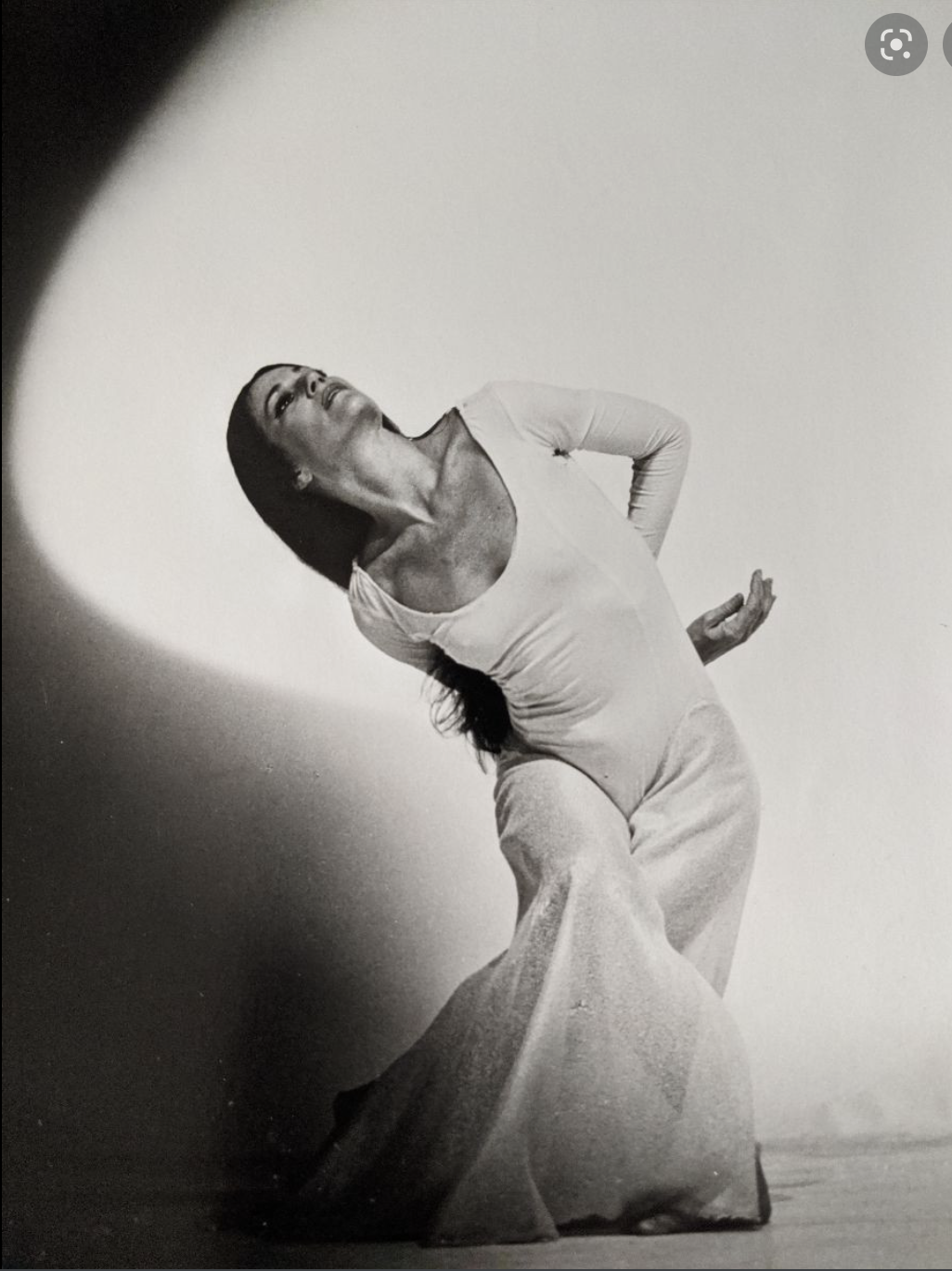
This week, Peggy looks back at a work choreographed for her by one of the founders of Toronto Dance Theatre, Patricia Beatty.
“Though she died in 2020, Trish will always remain a towering figure in my life. I met her in 1968 at a summer theatre school where she was teaching a daily movement class. The wisdom, sensuality and riveting immediacy of Trish’s dancing knocked me completely over. She inhabited her female body with grace and gravity. She spoke in the language of poetry - grand metaphors, invocations of the natural world, frank references to the body as the locus of desire, pleasure, intuition and creation. Up until that point I had aspired to become an actor, but from the day that I met her I understood that I had found my life’s work.
When I moved to Toronto in the fall of 1971 it was expressly to study with the company Trish co-directed, Toronto Dance Theatre. She always took my aspirations in dance absolutely to heart. Her guidance was honest and nuanced and she demonstrated through her dedication to the technique of Martha Graham that the physical practice of a dancer is an act of devotion. When, eventually, she was no longer capable of the rigours of Graham floorwork, she grieved the loss deeply. It was at this tremendously challenging time in her life that Trish suggested we once again intensify our relationship through the creation of a solo.
Trish’s highly specific and unique physicality permeated each of her dances, and it was an extraordinary experience to feel her impulses alive within my own body as I her danced her work. She was always extremely articulate about her choreographic intentions, so I’ll share her program note so that you can hear her speaking about this dance in her own voice” - PB
“Assara is a revered name from the ancient scripts of the pre-Hellenic islands of Crete and Cyprus. The word means pillar and it was used in these sophisticated civilizations to invoke the power of the Goddess. I have used it as a title for this dance about the renewal of true justice because we understand the symbol of a pillar of wisdom and a pillar of strength. The wise woman, once the central inhabitant of the female figure of justice, has been sadly and dangerously lost in our time. Where we look for fairness and compassion, we now see revenge and argumentativeness. This dance is a call for the renewal of true fairness and compassion in our thinking and practice of justice – it is also a call for the return of the wise woman into our lives and communities.” - Trish Beatty
To read more about the early years of TDT under the triumvirate leadership of Patricia Beatty, David Earle, and Peter Randazzo visit Dance Collection Danse here.



Person Project (1991)
This week we arrive at the last in a series of works that Peggy commissioned from esteemed choreographers in the early days of her solo company. Person Project was created for Peggy by NYC dancer and choreographer, Tere O’Connor.
“I first saw Tere O’Connor in a concert of Rosalind Newman’s work at Movement Research in lower Manhattan. The dancers were wearing practice clothes and Tere had on a kind of loose knitted shirt with sleeves that fluttered a few inches below his fingertips. His dancing was precise and delicate, organized according to an inscrutable logic. His gaze was cast downward, or perhaps inward, and I could not take my eyes off him.
At Danspace I encountered him in his own work – the duet Boy, Boy, Giant, Baby with Nancy Coenen – and was thunderstruck by his images and by the thud of realization that dropped for me. Tere also saw me perform (he sited Lar Lubovitch’s Exultate Jubilate) and one day he waited for me after a class I was teaching, introduced himself, and asked if I would dance for him in a quartet project, The Organization of Sadness. With hindsight, I understand how the androgyny of my body and my lack of femininity as a dancer made me a good choice in terms of supporting an underlying premise in his work — the disruption of expectation for conformity around gender expression.
Tere made Person Project for me in 1991. At Unique Clothing on lower Broadway I tried on a succession of vintage dresses, and Tere and Nancy chose a red velvet party dress lined with stiffening buckram. The bodice was hard and flat and the skirt made a tremendous whap folding in on itself with every spin. Person Project is 20 minutes long and performed in silence until the very end, so the dress provided a kind of percussive accompaniment. I made very detailed notes on the inner workings of the dance that tracked the shift of states and emotions in order to keep the momentum of the dance moving forward without the markers of a soundtrack to navigate the way.
Tere is an absolute iconoclast in an art form in which an alignment with trends in form and content often determine success. Working within the medium of choreography he also pushes against it. His dances involve precise imagery and motions, but they are also a working-out-of-things through investigation, accident, self-correction, and erasure. I count myself extraordinarily fortunate to have worked with him.” PB
Tere writes about this time in the early 90s: “I was a young artist when I met Peggy Baker and asked her to dance in my work. I remember being gobsmacked the first time I saw her dance. I then got to meet this unique creature who was an icon for me, but also very available and most importantly, thoughtful. The work I asked her to be a part of was only the second dance I had made with other performers in it! I did not know what I was doing yet as a choreographer. I knew what I was attempting to move away from and I knew that I was in a state of experimentation; not looking for manifestoes, or aesthetic proclamations, just a way to work that included my intuition about the form. I was in this process of questioning dance. Peggy entered that realm unflinchingly, like an open book. She graced The Organization of Sadness with her presence and placed trust in me. She put her incredible body and mind to work right next to my queries and it was a joy. This early support from such an intelligent, venerated dance artist contributed greatly to my confidence in choosing more anomalous pathways as I forged my choreographic imprint.
One does not arrive at any substantive knowledge before working for a good while, and I was in a process of parsing out assumptions around gender, virtuosity, musicality and presence in dance, seeking to individuate beyond the default settings of western dance history. I was looking for an expressive vehicle for the capaciousness of persona and an internal life. Choreography seemed to be a perfect container for the ever-changing dynamics of consciousness. As a queer artist, I had understood early on that the facade of a person and their internal world are rarely indicators of each other. So much of what is roiling underneath is held hostage by the requirements of facing other humans.
When I created Person Project for Peggy, I wanted to start by finding a generic human presence and then build a person and an internal world with great variations. I did not, however, want it to etch a visual mark on the surface of the work. Perhaps inspired by performers like Liv Ullman or Isabelle Adjani, two extraordinarily subtle actresses of the day, I felt Peggy’s uncanny ability to electrify her dancing with emotionality was a perfect building block. She successfully avoided the all-purpose, melodramatic grimace, so common in dancers at that time, to create an internalized performance with compelling contrasts of emotion. The being who inhabits this dance engenders great tenderness. It is a person who is perhaps driven by unnamed emotional territories. Her masterful performance was so subtle, and so deeply poignant.
Peggy Baker’s magnanimous presence in my life helped launch me into an unapologetic exploratory process that has not left me to this day. Her early support for my work holds inestimable value as an initial generator for my career, one blessed by other such benevolent people along the way. I am so grateful to Peggy Baker and so astounded at everything she has accomplished as an artist–and a person.“ TO
"You can sense the compulsive quality of the movement - the pushing, pulling, opening and shutting of the body (and spirit); the effort and concentration required to set its directions." - Alina Gildner, The Globe and Mail
For more information about Tere O’Connor’s and the theme of ambiguity in his work, visit Classical Voice here.
For a fun look at the history of the vintage clothing scene in New York, visit racked.com here.


This Isn't The End (1991)
The second commissioned work from James Kudelka in Peggy Baker Dance Projects’ repertoire, This Isn’t The End has a decidedly kooky edge to it. Explaining the method to his madness, James writes:
”When Peggy asked me to help oversee an evening at the PDT* that would include Romeo and Juliet Before Parting I thought it was important that the program include something with whimsy. For me, contemporary dance programs always had a tendency to take themselves very seriously. Creating something lighter and whimsical would be a challenge for us both.
The score of This Isn’t the End was created by John Oswald who wrote three pieces based on re-edits of readings of Agatha Christie mystery novel talking books - a garbled recreation of a few murder scenarios. And I asked Peggy to play the role of an old fashioned nurse, in white lab coat and striped hat. Peggy collected some wonderful props to go with that, and Marc Parent lit the stage with exposed fluorescent institutional lighting. The dance was unusual and surprising and answered the call for some lightness, and mystery - and accessibility - but it was also a little insane.” JK
Peggy adds: “Thinking back on This Isn’t the End, what really stands out is the joy of the rehearsals, all of the laughter James and I shared. I was wearing the costume with all of its many pieces early on in rehearsals — lingerie, white stockings, zip-front nurse’s uniform, snap-closure lab coat, lace-up shoes, fold-and-button nurse’s cap — and we laughed over the comparison to Jean-Pierre Perrault’s dancers, wearing their shirts, suits and ties, coats, hats and boots in rehearsal for JOE. We were the ridiculous to their sublime!
In addition to the elaborate costume there were props galore, each used in a multitude of ways — a watch, a pen, latex gloves, a surgical mask, a stethoscope, a huge syringe, a condom I inflated and sent aloft… and in a nod to Mark Morris’s Ten Suggestions, (which also had many props to manipulate) James once referred to This Isn’t the End as One Hundred and Ten Suggestions.
James also made one of these Agatha Christie mystery dances for Patricia Fraser, and though our solos were never danced on the same program, she does leave her shoes behind her when she exits the stage at the end of her solo, and there is a (mysterious) pair of shoes onstage when my solo begins.” PB
A case for Miss Marple indeed.
For more information about composer John Oswald’s plunderphonic sampling style (and to see what websites used to look like in the olden days) visit plunderphonics.com.
* Premiere Dance Theatre, now the Fleck Theatre at Harbourfront.


Inner Enchantments (1991)
This week we arrive in 1991, and look at the first of three solos that Peggy commissioned from dancer and choreographer, Molissa Fenley.
“Like all of the solos I commissioned from her, Molissa Fenley’s Inner Enchantments is a dance she made with the intention that both she and I would have it in our repertoires. Mo stayed at least one rehearsal ahead choreographically so she could work at her own pace and then teach me the material she had formalized, always dancing with me. I loved that, because her impulses were very different from mine and emulating her gave me a way of getting closer to her style.
Inner Enchantments is danced to Music in Twelve Parts: Part 1 by Philip Glass and it uses landmarks in the music as entry or completion points for choreographic sequences that unfurl over a minute or longer. The movement phrasing remains open, so as Mo and I danced together we would fall in and out of sync.
When I arrived at rehearsal the first day after she had completed the dance, Mo told me in a kind of off-hand way that Phil was coming to watch me do a run-through. I immediately began to panic. I barely knew the choreography and the thought of dancing alone for Philip Glass - to his music! - was terrifying, so Molissa agreed to dance with me. It was still terrifying, but also sensational! Phil loved seeing us dance together, our offset timing, the concentric circles of our floor patterns, the contrast in our physiques and physicalities. His response inspired me to invite Molissa to dance the premiere in Toronto as a duet, and upon seeing that duet, Cathy Levy invited us to dance together at the Canada Dance Festival. From that point on, Molissa and I each performed Inner Enchantments as a solo, though in my own performances the choreographer and the composer never failed to be present as a kind of afterglow.” - PB
Of this first commissioned solo, Molissa writes “Inner Enchantments is composed of two distinct movement/spatial phrasings: phrases that take place close in and around the body (an inner world) and expansive phrases that take place along the wide perimeter of the circle enclosing that inner space. The phrases are of pure movement and yet danced by Peggy with her very exact physical execution merged with her emotionality and spirit of generosity, a dance of possible mystery and magic is created. She immerses herself in the underlying internal and expresses to us that appearance in a joyful realization.”
Find out more about Molissa Fenley’s childhood and career in Dance Icons here.
Read more about Philip Glass’ bond with dance in Dance Magazine here.


Accident (1989)
This week we look back at Peggy’s mentorship and work with American dancer and choreographer, Annabelle Gamson.
“More than any other artist in the mid-1970s, Annabelle Gamson initiated unprecedented attention to the history of American modern dance. Her musically inspired, passionate performances of dances, choreographed by Isadora Duncan and others in the early twentieth century, brought about a resurgence of interest in Duncan’s work and her legacy, modern dance. Although Gamson was in her forties when she began performing Duncan’s dances, the dynamic strength and maturity of her physical presence, crowned by a mane of long white hair, distinguished her as singularly original.” The Encyclopaedia of Jewish Women
Peggy writes: “In my late thirties, eager to learn more about solo dancing, I sought out Annabelle as a mentor. She allowed me to take her classes alongside the extraordinary women in her group (including Roxane D’Orleans-Juste, Risa Steinberg and Nina Watt – all soloists with the Limon Company), and to understudy the historic works she was currently staging as well as the new group work she was creating. As a culmination of our work together, Annabelle choreographed two solos for me, Accident (1989) and Sand (1990).
Though she was working with her group mainly at the 92nd St Y in New York City, Annabelle was living outside the city, in Rye Brook, and all of our rehearsals took place in her home studio – an expansive space with a beautiful hardwood floor and wide windows, furnished only with a grand piano. For the weeks that we worked together I took morning class in the city, caught a train at Grand Central, was picked up at the station by Annabelle, and then rehearsed with her for 2 or 3 hours. Annabelle always insisted on giving me dinner before I left, and conversations over those meals were the occasion for stories about her childhood dance lessons, about Agnes de Mille and Anna Sokolow, about dancing on Broadway and with American Ballet Theatre, and about the interior world of the Isadora’s dances.
Accident was made in the wake of the death of a young woman – the child of one of Annabelle’s friends – in a car crash. It was a tragic dance, with sequences of jarringly brutal action, the body a distorted tangle. One day in rehearsal the images at play brought me to tears. Annabelle was shocked. “What ‘s wrong with you?” she demanded, “This isn’t happening to you, you’re telling the story.” Without that blunt intervention, some of the dances that lay ahead for me over the next decades could never have been navigated safely.” - PB
“Ms. Baker is a performer with a shining, expressive innocence and a body that is an astonishing collection of big bones and lithe muscles. Annabelle Gamson made inspired use of all that in ''Accident,'' set to a dark score by Francis Poulenc, in which a life seems to be relived in the moments right after an accident.” Jennifer Dunning, The New York Times
Read more about Annabelle Gamson’s Isadora Duncan reconstruction project here on The New York Times.
Listen to dance legends discuss the home created for modern dance by the 92nd Street Y here.


The Volpe Sisters (1989)
Peggy Baker Dance Projects has five works from the celebrated New York choreographer Doug Varone in our repertoire: two are commissions (The Volpe Sisters, Heaven), and three are acquisitions (In Thine Eyes, Home, and armour).
When asked about making this first work for Peggy, Doug wrote “It would have been easy to craft something physically sublime for her dancing body but I was interested in challenging both of us to dig deep into a non-dance narrative work that embraced the emotional center of Peggy’s talents. Letting that then define the physical nature of the work was a constant stripping away process of anything remotely dance related. Watching Peggy inhabit this character as an actor more than a dancer was revelatory and an aspect of her artistry I was in awe of.”
Of her performance partners for the piece, Peggy writes: “My original partner for The Volpe Sisters was Janie Brendel, and the duet was a commission for a concert we produced together at Danspace Project at St Mark’s Church in New York City. Janie is thin, with a fragile looking body that belies her strength and grit, and Doug threw her into the position of attempting to manage, guide and calm me as my big boned body pushed and obessed inside the choreography. Janie danced The Volpe Sisters with me in my debut solo concert in Winnipeg, May 1990, and a few months later Doug donned a housedress to perform a studio showing with me at the Amercan Dance Festival. Over the next few years Janie toured with me across the country from Vancouver to St. John’s, plus a hop across the pond to Ghent, Belgium.
Then in 2000, The Volpe Sisters was revived as an opportunity for me to perform with the great actor, Jackie Burroughs. We reconstructed the piece in Toronto prior to a rehearsal week in New York City. Doug is an incredible performance coach and an impeccable director of his work, and it was magnificent to be in rehearsal with the two of them - Jackie opening herself to her character and to the choreography with complete vulnerability, and Doug guiding her with clarity, nuance and tenderness. Throughout our week in NYC, Jackie narrated every street with memories from the 1960s and her time with Lovin’ Spoonful guitarist, Zal Yanovsky. The time with Jackie went deep. The performances with her are unforgettable.”
Deborah Jowitt reviewed the Danspace premiere of the work in The Village Voice in 1989: "Baker...is a woman damaged in some way, watched over almost emotionlessly...Everything between the women is careful and fugitively tender, as if love long ago had eroded into patience.” Read the full review here.
Learn more about Doug Varone and his incredible NY-based company Doug Varone and Dancers here.
Learn more about the story of Jackie Burroughs meeting Zal Yanovsky in Spacing here.


The Windows (1988)
Acclaimed dancer and choreographer Christopher House created The Windows on Peggy back in 1988. He is our guest writer for this Creation Catalogue blog entry:
The Windows is an eight-minute solo I made for Peggy Baker, set to Philip Glass’s gorgeous String Quartet #2. I can’t remember where the title came from, but I think it was Peggy’s idea. Watching a VHS recording of the piece, the first time I’d seen it in thirty years, I was blown away by her performance.
Making a solo for another dancer is an intimate act. In sharing your kinetic impulses with just one other artist, you often make them a surrogate for the dancer you imagine in your dreams. You always learn from this experience and when you work with a singular artist like Peggy, your habits and assumptions can be transformed.
Rediscovering The Windows, I was reminded that watching Peggy dance is a master class in space and phrasing. She carves, sculpts and extends the space around her with uncanny skill, using her hands, feet, limbs, torso and head with legato mastery. Every surface of her body participates in every gesture. The clarity of her trajectories leaves afterimages and her innate sense of time makes her body sing. When confronted with more challenging passages of fast footwork and percussive changes of direction, she unleashes her inner warrior, holding nothing back. Her presence resonates with her ardent commitment to each passing moment.
My favourite moment in this solo comes at the end of the third movement as she turns slowly to the floor and melts into a series of knee crawls on an upstage diagonal. Facing away from us, her expressive back compels us to join her on her mysterious, touching journey.
I love Peggy as a friend and as an artist. Working with her on this solo was a rare privilege. - C. H.
“Mr. House is superbly served by a dancer who more than completes every sharp, slicing gesture. A fast dance of enigmatic tension involving kicks, pounces and clenched fists, it plays up to Ms. Baker’s grace and power and goes beyond the traditional psychological study.” Anna Kisselgoff, New York Times, 1989.
Full review here.
For more about Christopher House visit CBC Gem here.


